Archaeology.Today
Field Report

Snake-Headed Vessel Links Rural Roman Villa to Sabazios Cult

Fragments from a vessel found at the Roman villa of Collet in northeastern Spain include a two-headed serpent handle. Researchers date its burial to the reign of Augustus and argue that the imagery may connect the rural site to the private worship of Sabazios.

September 1, 2026
1 Source
Roman villa of Collet
Snake-Headed Vessel Links Rural Roman Villa to Sabazios Cult
The Story

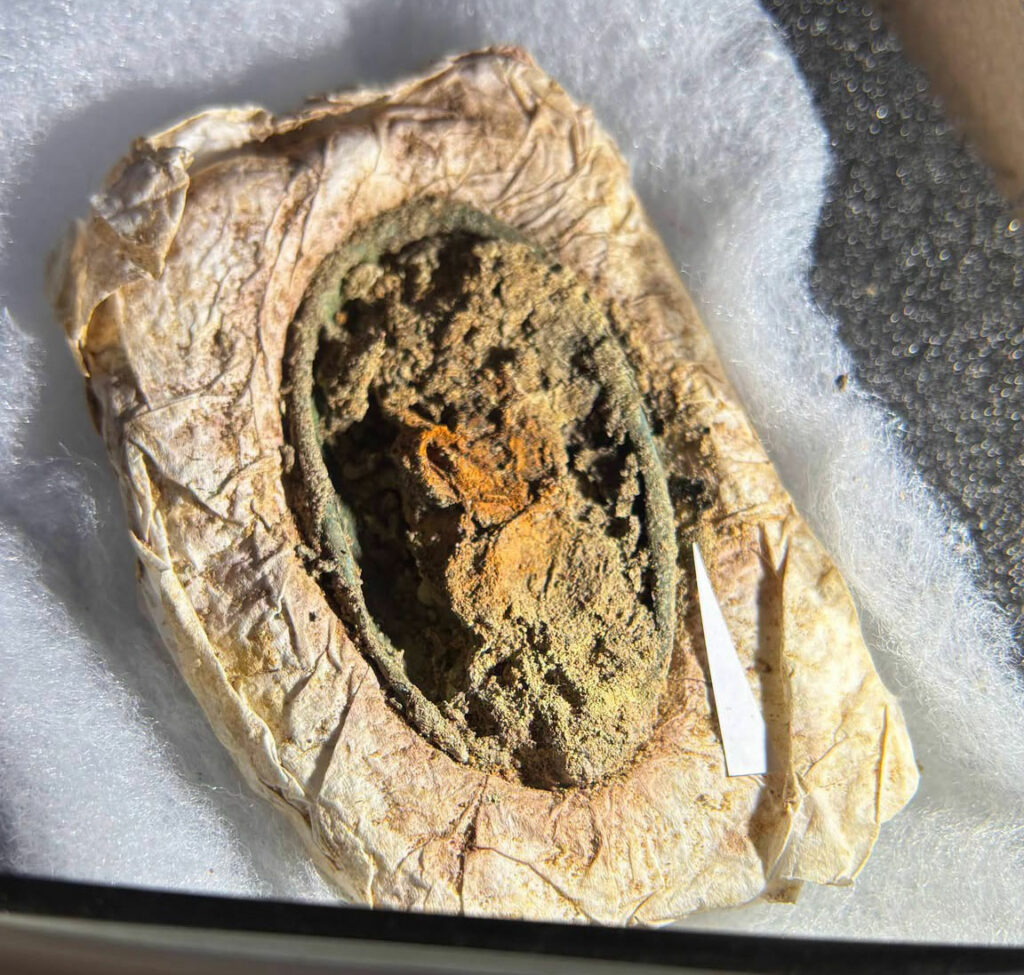
Fragments of a decorated vessel discovered at the Roman villa of Collet in northeastern Spain may provide early evidence that the cult of Sabazios reached rural communities in this part of the Roman Empire. The pieces include part of the rim and a 160-millimeter-long handle shaped as a two-headed serpent.

The find was reported in a study published in Antiquity by a research team led by scientists from the University of Girona. Archaeologists recovered the fragments from layers containing associated pottery, including wine jars and cups. Based on that context, they concluded that the vessel was broken and buried during the reign of Emperor Augustus, between 27 BCE and 14 CE, meaning it was made during that period or shortly beforehand.

Mineral analysis of the clay did not establish where the vessel was manufactured. Some characteristics, however, may point to a North African origin. The researchers described it as an early rural example of what they call Iberian serpent-ware.

Serpent imagery appeared in several religious traditions in the Roman world, including the private worship of Sabazios, a deity associated with Thrace and Phrygia. It was also used in other cults, such as that of Mithras, so the handle alone does not establish the vessel’s religious affiliation.

The study’s authors connect the Collet object to Sabazios partly because of evidence from nearby Empúries, ancient Emporiae. Archaeologists previously found a portable bronze triptych in an Augustan-era or early first-century tomb there. Two plaques survive, including a central panel depicting Sabazios with symbols associated with his cult.

The combination of the vessel and the earlier Emporiae discovery leads the researchers to suggest that Sabazios worship may have circulated through networks extending beyond major urban centers. They propose that a traveling priest, possibly arriving from the eastern provinces of the Roman Empire, could have introduced or reinforced the cult at Emporiae. From there, its influence may have reached the Collet villa, where the practices could have become part of private domestic worship.

The authors emphasize that the evidence indicates a possible connection rather than proving exactly how the vessel was used or how the cult reached the villa. They argue, however, that the discovery is consistent with the presence of small religious communities across wider Roman territories, including working rural settlements.

Reference Desk

Sources & Further Reading

Continue Exploring

Related Archaeology

More stories
Fragments Reveal Previously Unknown Fourth-Century Roman Law Book
01
Artifacts
Score 85

Fragments Reveal Previously Unknown Fourth-Century Roman Law Book

A University of Cincinnati scholar and the Penn Museum have joined 50 animal-skin fragments into a double-sided page from a late-fourth-century Roman legal text. The Latin manuscript discusses taxation and public infrastructure but does not match any previously known imperial legal code.

Read story
Proteins Reveal Complex Paint Recipes in Ancient Egyptian Artworks
02
Ancient Civilizations
Score 20

Proteins Reveal Complex Paint Recipes in Ancient Egyptian Artworks

A study of 28 microscopic samples from 14 Egyptian artworks has identified animal glues from several species along with plant proteins linked to sesame and moringa. The findings suggest painters may have used seed-processing byproducts, offering new information for both ancient craft history and conservation.

Read story
Textile Fragments Survive in Eighth-Century Woman’s Tomb at Skonager
03
Ancient Civilizations
Score 20

Textile Fragments Survive in Eighth-Century Woman’s Tomb at Skonager

Researchers have recovered rare textile fragments from an eighth-century tomb at the Skonager site in western Jutland. The fabric survived on two scoop brooches, while planned textile and dental analyses may reveal details about the woman’s clothing, health, diet, and movements.

Read story
Possible Etruscan Port Found Near Submerged Temple in Italy
04
Ancient Civilizations
Score 20

Possible Etruscan Port Found Near Submerged Temple in Italy

Divers surveying the seafloor near Punta della Vipera found carved limestone blocks arranged in an L-shaped double row. The structure, about 300 feet offshore, may have served as a landing place for visitors to a nearby Etruscan temple.

Read story
Study Identifies Animal and Plant Proteins in Ancient Egyptian Paints
05
Artifacts
Score 20

Study Identifies Animal and Plant Proteins in Ancient Egyptian Paints

Researchers analyzed 28 paint samples from 14 Egyptian artifacts dated from 1425 B.C. to A.D. 400. Cattle collagen was the most common binding material, while proteins from other animals and plants indicate a broader range of ingredients in ancient paint adhesives.

Read story