
Archaeology.Today
Field Report

Prison Community Dig Reveals Mesolithic Flint and Later Finds in Wiltshire

Men at HMP Erlestoke in Wiltshire have taken part in a four-week archaeological test-pitting project, uncovering Mesolithic flints alongside Romano-British and later pottery, 18th-century glass and a clay-pipe fragment. The project also links archaeology with education, rehabilitation and creative work inside the prison.

September 8, 2026
1 Source
HMP Erlestoke
Prison Community Dig Reveals Mesolithic Flint and Later Finds in Wiltshire
The Story

A community archaeology project at HMP Erlestoke in Wiltshire has uncovered a collection of Mesolithic flints and artefacts from later periods, while giving prisoners the opportunity to take part in archaeological research on the prison site.

The “Digging for Erlestoke” project was supported by The National Lottery Heritage Fund and led by Leigh Chalmers, heritage inclusion manager at Wessex Archaeology. It follows a small excavation carried out at the site in 1963, when the institution had a different use and finds dating to the Bronze Age were recovered.

Because of the restrictions associated with the prison location, work was limited to specific areas south of the former 18th-century manor house, which is now occupied by the Education Centre. Participants took part in site-history research, risk-assessment training and ground-penetrating radar surveys conducted with geophysicists. They also attended ecology sessions and made bird and bat boxes for the prison grounds.

In September 2023, eight men worked with archaeologists Lee, Steve and Eva during four weeks of test-pitting. By the end of the excavation phase, they had learned to mark out and dig test pits, select suitable tools, identify changes in stratigraphy, record plans and carry out initial processing and identification of finds, according to Wessex Archaeology.

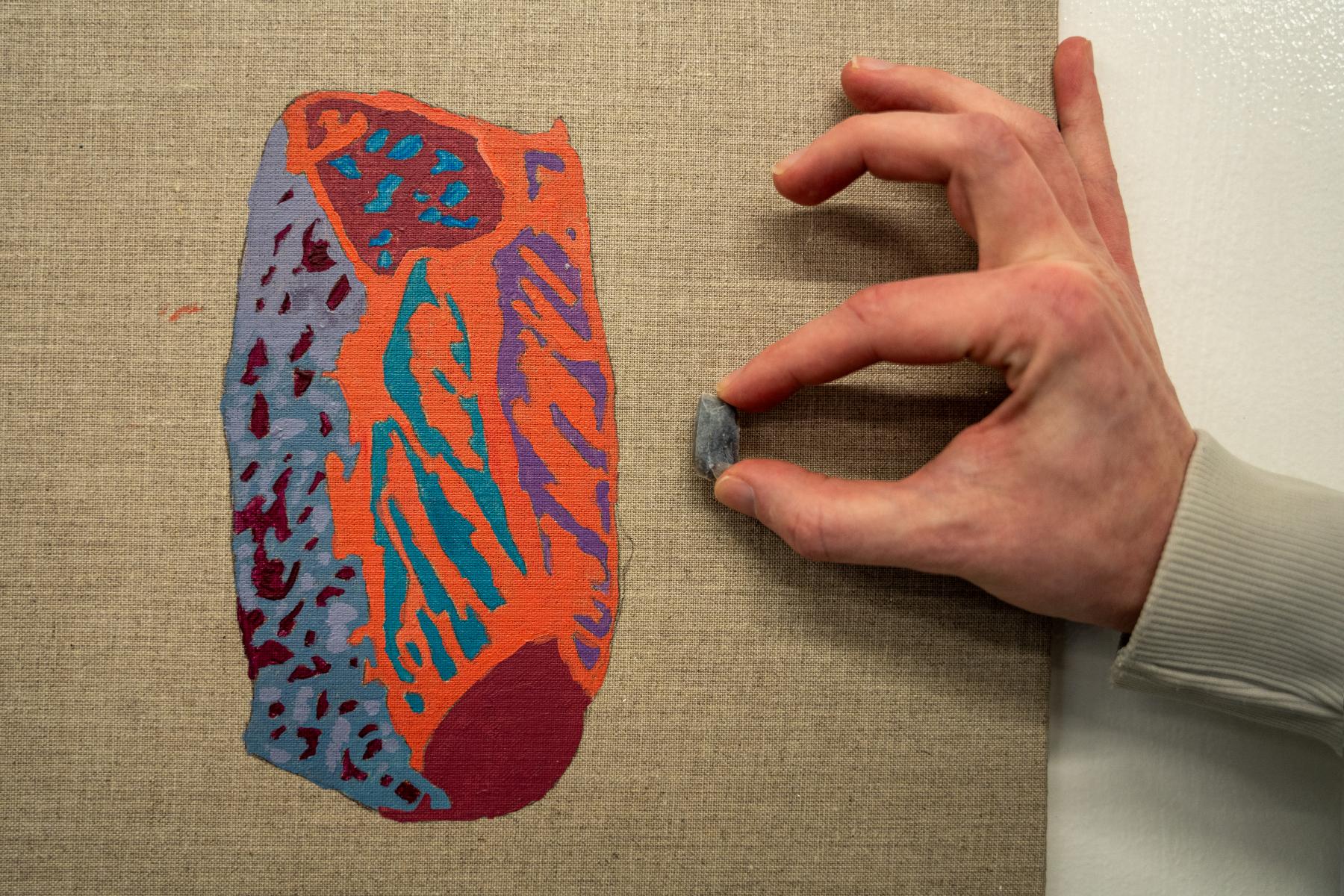
The recovered material included Mesolithic flints, Romano-British pottery, medieval pottery fragments, 18th-century glass and part of a clay pipe. The finds were subsequently processed and recorded, and inspired artwork produced through sessions with a finds illustrator and artist Sue Martin. These included enlarged paintings based on the flints and pottery.

Elizabeth Williams, education manager at HMP Erlestoke, said the project had been incorporated into activities including mathematics, horticulture, art and library development. She described archaeology as particularly accessible because it was taking place on site and connected with the participants’ past, present and future.

Independent evaluators will assess the project’s potential effects on the wellbeing of the men involved. The next stage is for participants to write the post-excavation report so the discoveries can be added to the Mesolithic archaeological record of the area. Plans are also being developed to share the findings with the wider community.

Reference Desk

Sources & Further Reading

Continue Exploring

Related Archaeology

More stories
Excavations Recast the Date of Galich’s Lost Lower Fortress
01
Archaeological Science
Score 115

Excavations Recast the Date of Galich’s Lost Lower Fortress

LiDAR mapping and 2026 excavations at Galich’s Lower Settlement found defensive earthworks and artifacts mainly dating to the 14th and 15th centuries. The evidence challenges its traditional identification as a 12th-century fortress and points instead to construction around the mid-15th century, possibly amid a dynastic conflict.

Read story
More Than 2,600 Medieval Silver Coins Found in Kolomna
02
Artifacts
Score 95

More Than 2,600 Medieval Silver Coins Found in Kolomna

Rescue excavations in Kolomna have uncovered more than 2,600 medieval silver dengi concealed in a ceramic jug. Researchers describe the assemblage as the largest intact Russian coin hoard known from the first half of the 15th century, with rare locally minted coins and previously unknown varieties.

Read story
Archaeologists Begin New Survey of the 1410 Grunwald Battlefield
03
Discoveries
Score 75

Archaeologists Begin New Survey of the 1410 Grunwald Battlefield

About 40 archaeologists, metal detectorists and museum specialists are surveying previously unexamined areas of Poland’s Grunwald battlefield. The work aims to refine the map of fighting between Polish-Lithuanian forces and the Teutonic Order, building on systematic research conducted since 2014.

Read story
Medieval Deserted Settlement Revealed at Halberstadt Development Site
04
Discoveries
Score 75

Medieval Deserted Settlement Revealed at Halberstadt Development Site

Excavations at Am Frevelgraben, on the eastern edge of Halberstadt in Saxony-Anhalt, have exposed rows of sunken buildings, wells and changing ditch boundaries. The settlement appears to have been abandoned in an unusually orderly way, with residents taking most of their possessions when they left.

Read story
Bronze-Casting Mould and Weapons Found at Tatarstan Pyanobor Site
05
Excavations
Score 60

Bronze-Casting Mould and Weapons Found at Tatarstan Pyanobor Site

Excavations at the Kipchak Archaeological Complex in Russia’s Tatarstan have yielded a bronze-casting mould, bronze and iron arrowheads, a spearhead, jewellery and decorated pottery. Kazan Federal University archaeologists say the finds may help investigate the debated origins of the Pyanobor culture.

Read story
Villa Complex and 84-Square-Metre Mosaic Found in Eastern Türkiye
06
Excavations
Score 60

Villa Complex and 84-Square-Metre Mosaic Found in Eastern Türkiye

A farmer’s discovery of mosaic remains in Salkaya village led to excavations revealing a settlement with a villa, bathhouse, church, grain-storage area and child’s grave. Archaeologists date the complex to the Late Roman and Early Byzantine periods, but its original owner remains unknown.

Read story