
Archaeology.Today
Field Report

Community Dig Reveals Sheffield Castle Wall Beneath Steelworks Remains

A 10-week community excavation at Sheffield Castle has exposed sandstone remains identified by the project team as part of the castle. Participants first documented later structures associated with the 19th-century Castle Hill Steel Works, which was built over the castle’s motte.

September 8, 2026
1 Source
Sheffield Castle
Community Dig Reveals Sheffield Castle Wall Beneath Steelworks Remains
The Story

A community excavation at Sheffield Castle has uncovered part of the castle’s sandstone structure beneath remains associated with later industrial development. The discovery came during a 10-week public archaeology programme organized with excavation sessions and guided site tours.

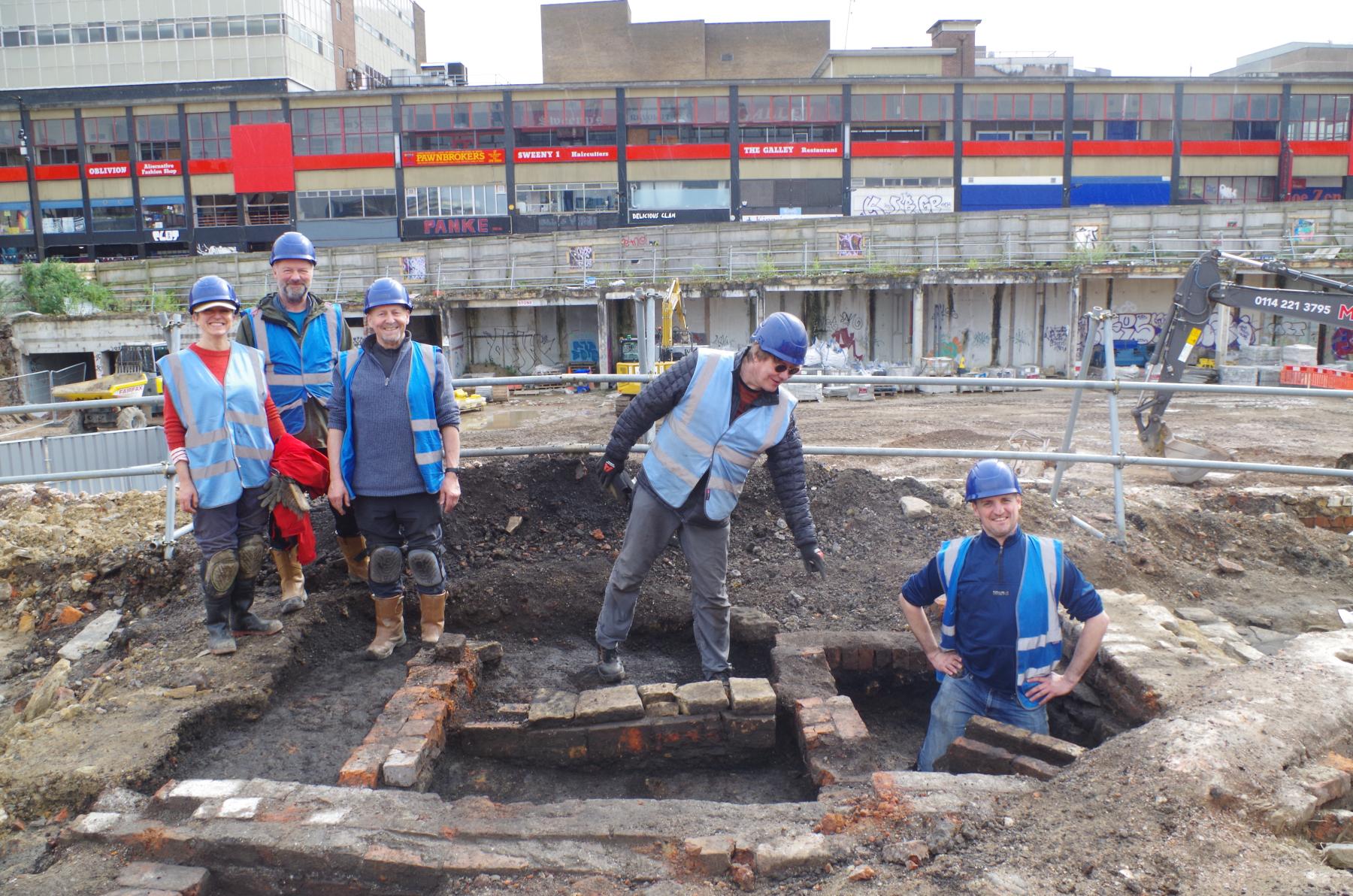
Participants initially worked through features linked to the 19th-century Castle Hill Steel Works, which had been constructed over the motte. With guidance from archaeologist Viktoría Halldórsdóttir and Engagement and Inclusion Officer Natasha Bramall, they recorded structures, examined brickwork and considered how different building phases related to one another.

One participant, Roger, described helping establish when a stone wall had been built. The wall rested on clay over the motte’s loose stone, while a brick fragment in its mortar indicated that it was a later addition, according to his account published by Wessex Archaeology.

The project team also hoped to locate surviving evidence of the castle beneath the complex layers of later construction. As excavation continued, participants began finding more sandstone. In the seventh week, the team said it could identify the remains as part of Sheffield Castle.

The exposed castle wall lies between later brick walls and has been cut by a modern drain. Community members used hand tools to carefully reveal the structure and took part in recording and interpreting the features under the direction of the archaeological team.

The public programme offered one-, two- and three-day excavation passes, with five places available each day. Wessex Archaeology said the spaces were quickly filled, making the work a collective effort involving local residents as well as professional staff.

At the time of the report, three weeks remained in the excavation. Further work was expected to investigate more of the site’s archaeological remains, although the material published by Wessex Archaeology did not provide a final account of the excavation’s results.

Reference Desk

Sources & Further Reading

Continue Exploring

Related Archaeology

More stories
Bronze-Casting Mould and Weapons Found at Tatarstan Pyanobor Site
01
Excavations
Score 40

Bronze-Casting Mould and Weapons Found at Tatarstan Pyanobor Site

Excavations at the Kipchak Archaeological Complex in Russia’s Tatarstan have yielded a bronze-casting mould, bronze and iron arrowheads, a spearhead, jewellery and decorated pottery. Kazan Federal University archaeologists say the finds may help investigate the debated origins of the Pyanobor culture.

Read story
Villa Complex and 84-Square-Metre Mosaic Found in Eastern Türkiye
02
Excavations
Score 40

Villa Complex and 84-Square-Metre Mosaic Found in Eastern Türkiye

A farmer’s discovery of mosaic remains in Salkaya village led to excavations revealing a settlement with a villa, bathhouse, church, grain-storage area and child’s grave. Archaeologists date the complex to the Late Roman and Early Byzantine periods, but its original owner remains unknown.

Read story
4,000-Year-Old Geometric Tablet Found at Lake Garda Settlement
03
Excavations
Score 40

4,000-Year-Old Geometric Tablet Found at Lake Garda Settlement

Archaeologists excavating the Early Bronze Age settlement of Lucone D near Italy’s Lake Garda have recovered a clay tablet marked with geometric designs. It is the 21st enigmatic tablet found across the wider Lucone site, but the purpose and meaning of the markings remain unknown.

Read story
Excavations Recast the Date of Galich’s Lost Lower Fortress
04
Archaeological Science
Score 40

Excavations Recast the Date of Galich’s Lost Lower Fortress

LiDAR mapping and 2026 excavations at Galich’s Lower Settlement found defensive earthworks and artifacts mainly dating to the 14th and 15th centuries. The evidence challenges its traditional identification as a 12th-century fortress and points instead to construction around the mid-15th century, possibly amid a dynastic conflict.

Read story
Excavations Trace Centuries of Change Along Side’s 390-Metre Street
05
Excavations
Score 40

Excavations Trace Centuries of Change Along Side’s 390-Metre Street

Archaeologists have completed work on Street B, a nearly 390-metre-long thoroughfare in the ancient city of Side in southern Turkey. The excavation documented a second-century AD colonnade, three monumental entrances and a fifth-century transformation linked to the city’s Bishop’s Palace complex.

Read story
Excavation in Tonnerre Reveals 1,500 Years of Hilltop Settlement
06
Excavations
Score 40

Excavation in Tonnerre Reveals 1,500 Years of Hilltop Settlement

An Inrap excavation on Montbellant hill in northern France has uncovered medieval buildings, Roman-period remains and evidence of a first-century BC Gallic oppidum. The layered site, investigated ahead of house construction, is helping archaeologists trace the development of Tonnerre’s upper town.

Read story