
Archaeology.Today
Field Report

Kenyan Footprints Suggest Large Groups of Paranthropus Traveled Together

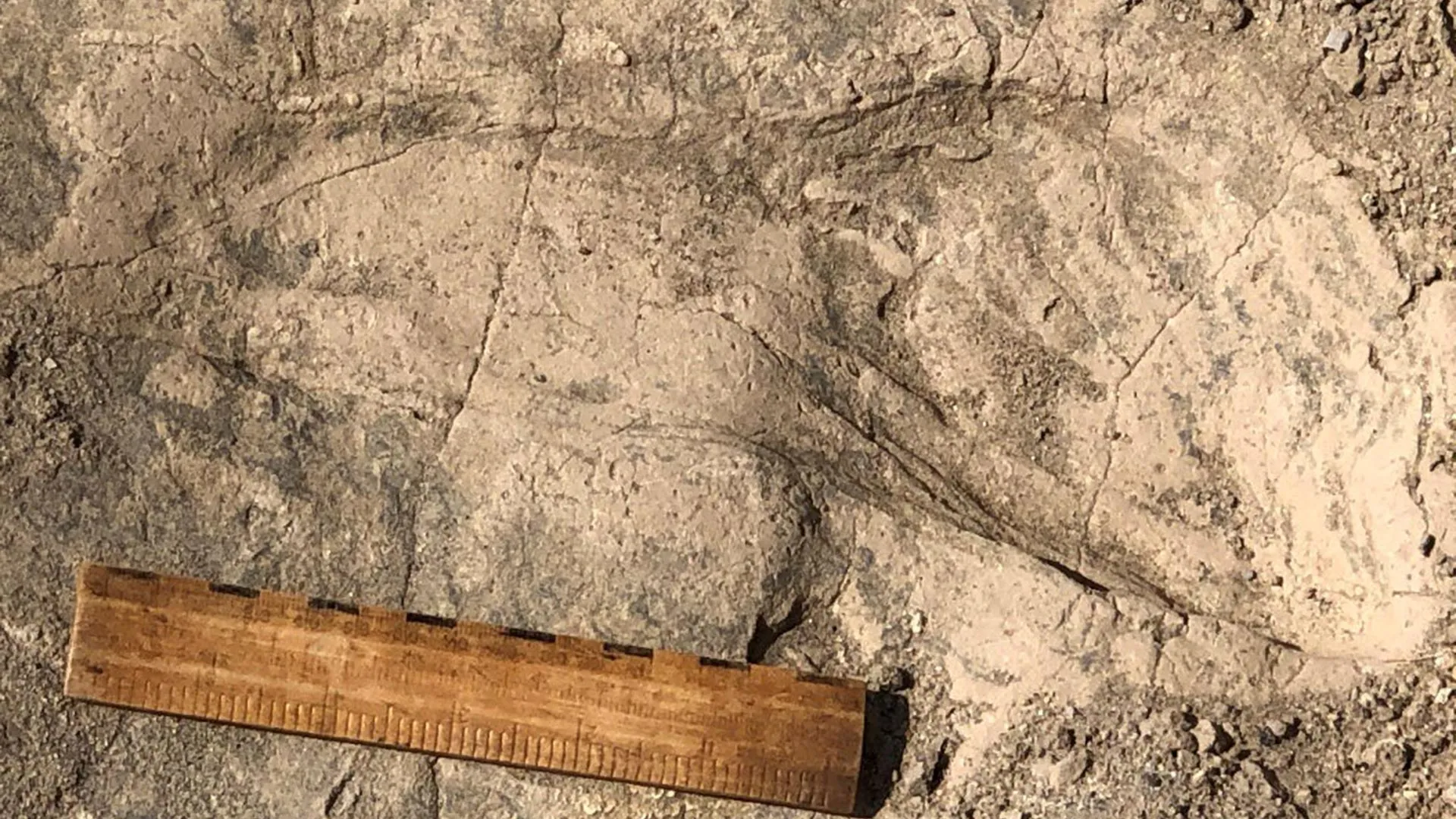
A 1.4-million-year-old footprint trail near Kenya’s Lake Turkana appears to preserve the movements of eight Paranthropus boisei individuals. Track size suggests that some reached up to 1.8 meters in height and about 75 kilograms, while the arrangement may offer rare evidence of group behavior.

September 5, 2026
1 Source
Kenyan Footprints Suggest Large Groups of Paranthropus Traveled Together
The Story

A trail of 1.4-million-year-old footprints from northern Kenya appears to record eight Paranthropus boisei individuals moving together along an ancient lakeshore. The tracks also indicate that some members of this extinct human relative may have been considerably larger than earlier skeletal estimates suggested.

The international research team, involving scientists from the United States and Kenya, identified the footprints using analytical methods developed by the group in 2024. Their classification relied on features of foot anatomy and the way the individuals moved. The researchers said all eight trackmakers were probably adults, and most appear to have been male.

Footprint dimensions point to human-like body sizes, with some individuals estimated to have stood as tall as 1.8 meters and weighed about 75 kilograms, according to lead author Kevin Hatala of Chatham University and the Max Planck Institute for Evolutionary Anthropology. The estimate is notable because much of the known fossil record for Paranthropus boisei consists of skulls, including specimens with large jaws and teeth. Fossils from the rest of the body are much rarer.

The tracks therefore provide evidence about body size that is difficult to obtain from the available skeletal material. The findings also challenge earlier research suggesting that P. boisei was substantially smaller than Homo erectus, which lived during roughly the same broad period.

Because footprints can form and be preserved over a relatively short interval, they can capture behavior in a way that bones accumulated over long periods generally cannot. In this case, the researchers interpret the tracks as evidence that eight individuals were traveling together. The apparent absence of females or children led them to suggest that the group may reflect a more complex social structure, although the footprints cannot establish the group’s exact relationships or behavior.

The discovery comes from a wider concentration of hominin footprints around Lake Turkana. Researchers have documented hundreds of tracks at more than six sites in the region, including lake-margin deposits in two parts of East Turkana separated by about 40 kilometers and dating to approximately the same period. They propose that lakeshores repeatedly attracted hominins because they offered important resources, but the specific reasons for those visits remain under investigation.

The team plans to return to Kenya to continue studying the footprint sites. Their findings, published in Proceedings of the National Academy of Sciences, demonstrate how trackways can contribute evidence about anatomy, locomotion, social behavior and past environments beyond what skeletal fossils alone reveal.

Reference Desk

Sources & Further Reading

Continue Exploring

Related Archaeology

More stories
Theban Tomb Reveals Centuries of Changing Burial Practices
01
Ancient Civilizations
Score 20

Theban Tomb Reveals Centuries of Changing Burial Practices

A study of chamber three in Egyptian tomb TT 209 documented 16 mummified people, remains of at least four others and a mummified dog. The arrangement suggests that later burials were carefully adapted around earlier occupants rather than placed in a completely disordered space.

Read story
Pollen Reveals Repeated Repairs on 2,200-Year-Old Adriatic Shipwreck
02
Underwater Archaeology
Score 20

Pollen Reveals Repeated Repairs on 2,200-Year-Old Adriatic Shipwreck

A study of the Ilovik-Paržine 1 wreck off Croatia identified pine tar and a tar-beeswax coating used to protect its hull. Pollen preserved in the materials suggests the vessel was coated or repaired four to five times with substances sourced from different parts of the Adriatic and Mediterranean.

Read story
Intact Indigenous Pot Found at Historic Florida Mission Site
03
Discoveries
Score 20

Intact Indigenous Pot Found at Historic Florida Mission Site

University of Florida students uncovered a small, undecorated clay vessel at Mission San Francisco de Potano, a former 17th-century mission and Potano-Timucua village near Gainesville. The pot is roughly 400 years old and appears to have been deliberately placed in a pit, though its purpose remains unknown.

Read story
Archaeological Fragments Identify a December 1957 Detroit Newspaper
04
Discoveries
Score 20

Archaeological Fragments Identify a December 1957 Detroit Newspaper

Newspaper fragments recovered from a mid-20th-century midden at Michigan State University have been identified as pages from the December 12, 1957, Detroit Free Press. Differences between the excavated material and a digitized copy suggest the fragments may come from another edition of that day’s paper.

Read story
Small Glass Pieces Recalled as Possible Privacy Windows at Island School
05
Discoveries
Score 20

Small Glass Pieces Recalled as Possible Privacy Windows at Island School

Tiny pieces of glass shown at the Island school site prompted a former student to recall small, high bathroom windows that admitted light while preserving privacy. The recollection offers a possible interpretation of how the glass may have been used.

Read story
Restoration Underway at Ninth-Century Trapeang Phong Temple
06
Discoveries
Score 20

Restoration Underway at Ninth-Century Trapeang Phong Temple

Cambodia’s APSARA National Authority has begun restoring Trapeang Phong temple in Angkor Archaeological Park, where weather and age have caused structural deterioration. The work will proceed in two phases, beginning with repairs to the western section and moving from the foundation upward.

Read story