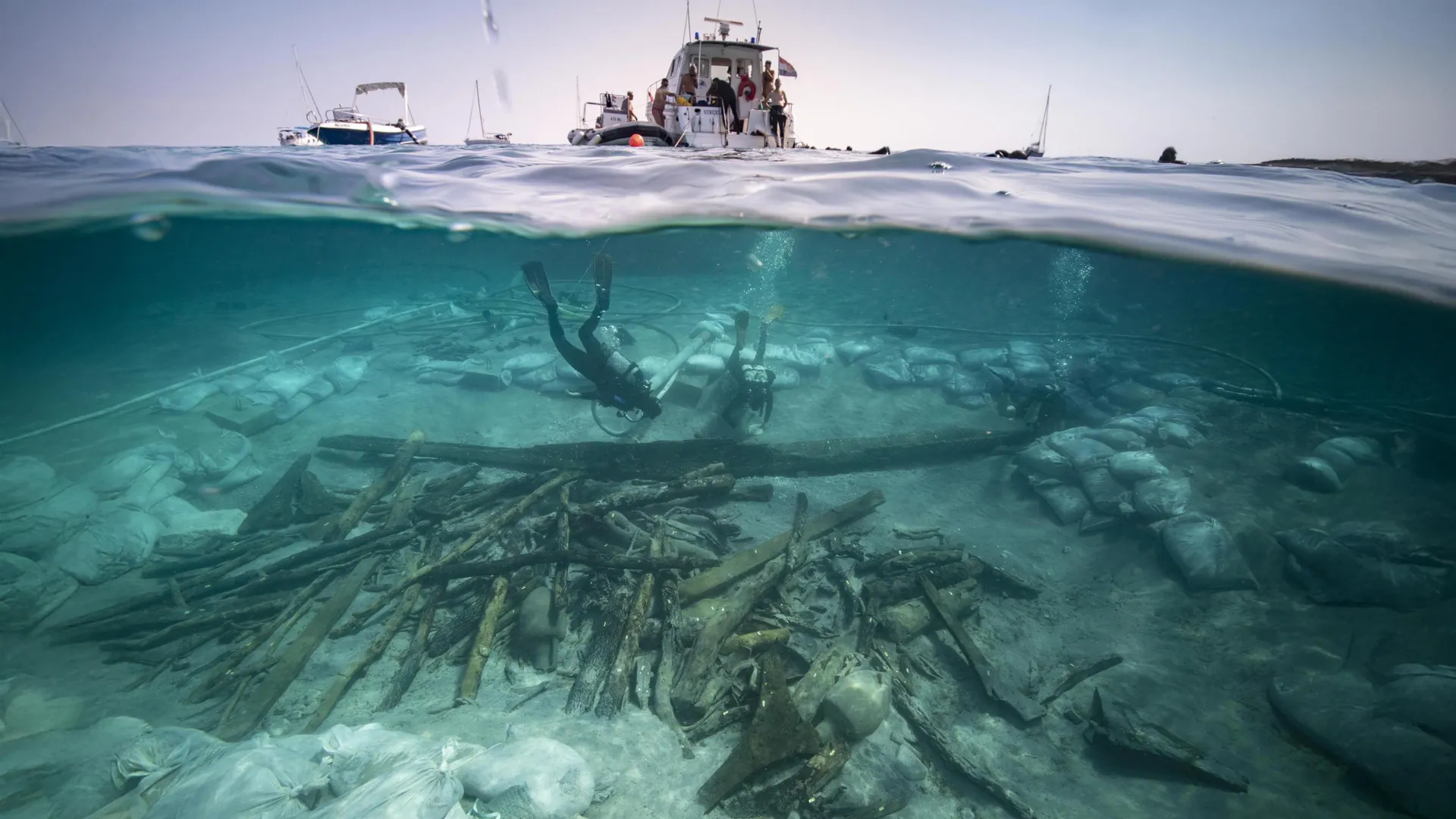
Researchers analyzing protective coatings from the Ilovik-Paržine 1 shipwreck have found evidence of ancient waterproofing practices and repeated repairs carried out over the vessel’s working life. The Roman Republican wreck sank about 2,200 years ago off the coast of present-day Croatia.
The study, published in Frontiers in Materials, examined 10 coating samples collected from the ship. Molecular analysis showed that the materials were primarily made from heated coniferous resin, or pine tar, commonly called pitch. One sample contained a mixture of pine tar and beeswax. Known to Greek shipbuilders as zopissa, this formulation was described as more flexible and easier to spread when heated.
The research combined molecular testing with pollen analysis, an approach that allowed the team to investigate not only what the coatings were made from but also where some of the materials may have been produced or applied. Sticky pitch can trap pollen from nearby vegetation, preserving a record of the surrounding landscape.
The pollen identified in the samples came from environments associated with Mediterranean and Adriatic coasts and valleys. The assemblage included plants linked to holly-oak and pine forests, Mediterranean shrubland, and areas where olive and hazel trees grew. Alder and ash pointed to riverbank and coastal vegetation, while smaller amounts of fir and beech were consistent with mountainous areas near the northeastern Adriatic coast.
The distribution of the coatings suggests that the ship received four or five separate applications. The stern and central sections appear to have been treated with the same material, while three distinct batches were identified around the bow. Researchers say this pattern may reflect repeated repairs using materials obtained in different locations around the Mediterranean.
Earlier analysis of the ship’s ballast had pointed to Brundisium, now Brindisi on Italy’s southeastern coast, as a possible construction location. The new pollen evidence suggests that some coatings may also have been applied there, while other layers could have been added along the northeastern Adriatic near the wreck’s final location.
The wreck was discovered in 2016 and has since been investigated several times. The study was conducted by researchers from the Croatian Conservation Institute’s Department for Underwater Archaeology and the ADRIBOATS program at Aix-Marseille University’s Centre Camille Jullian.