Ancient DNA from Shimao, a large stone-walled settlement in northern China, is providing new evidence about the community’s origins, family structure and treatment of sacrificial victims. The findings come from a 13-year project that analyzed nuclear DNA from 169 ancient human samples, including 144 unrelated individuals.
Shimao is located in Shaanxi Province and dates to approximately 4,200–3,700 years before the present. The settlement covered about four square kilometers and was divided into areas with different functions. Archaeological evidence indicates that it had an organized and strongly stratified society, along with extensive ritual activity and human sacrifice.
Led by Qiaomei Fu of the Institute of Vertebrate Paleontology and Paleoanthropology at the Chinese Academy of Sciences, the research team compared the new genomes with previously published ancient DNA from across China. Most of the people at Shimao appear to have descended from local communities that had lived in the region about 1,000 years earlier. The researchers also identified genetic and cultural connections with Yangshao-associated populations of the Yellow River region.
The analysis points to wider prehistoric contact as well. Shimao’s population was connected to communities associated with Taosi Culture in southern Shanxi, steppe Yumin-related groups and southern rice-farming populations. These links suggest that agricultural and pastoral communities exchanged people and cultural influences across a broad area, rather than Shimao developing in isolation.
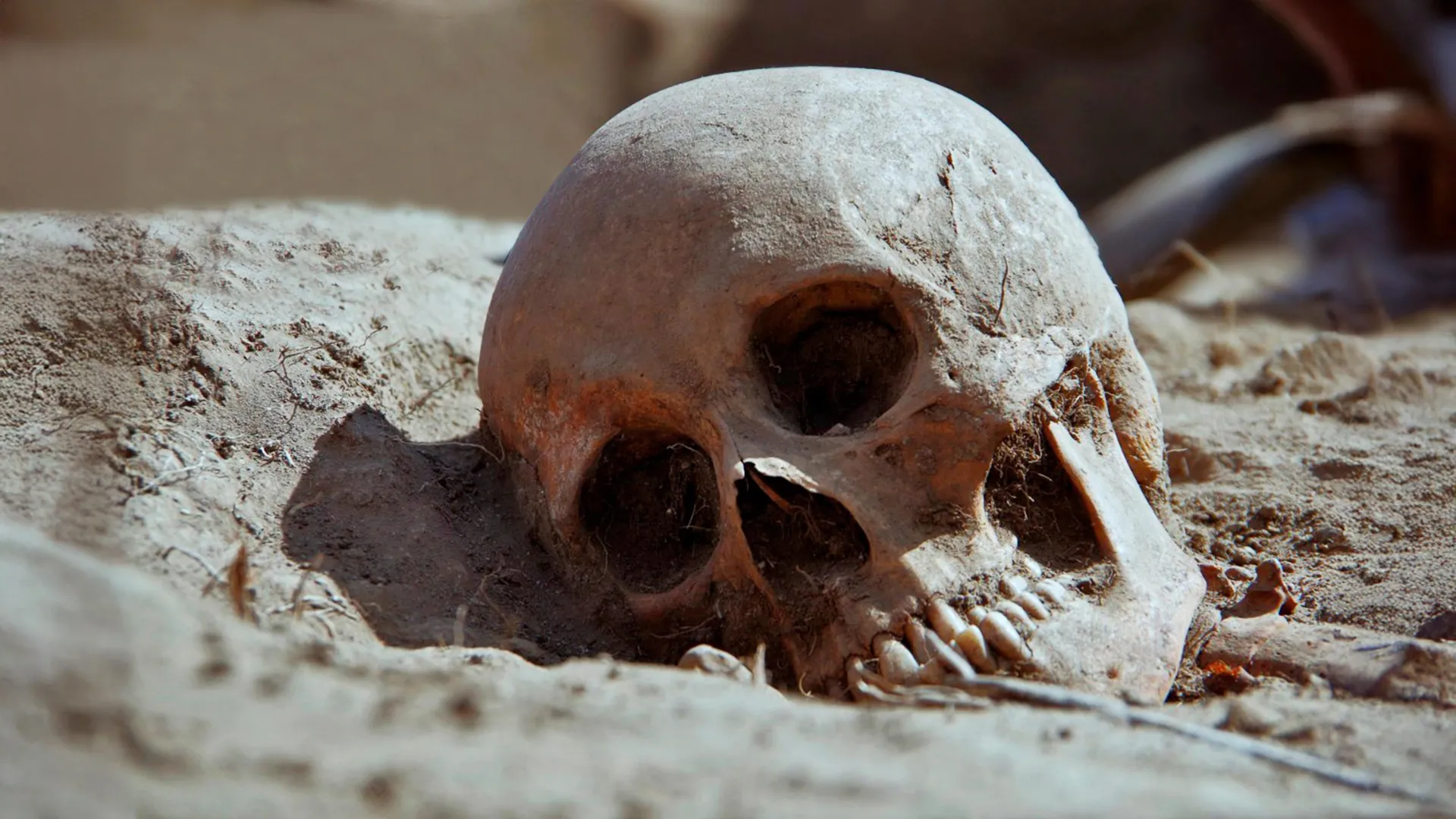
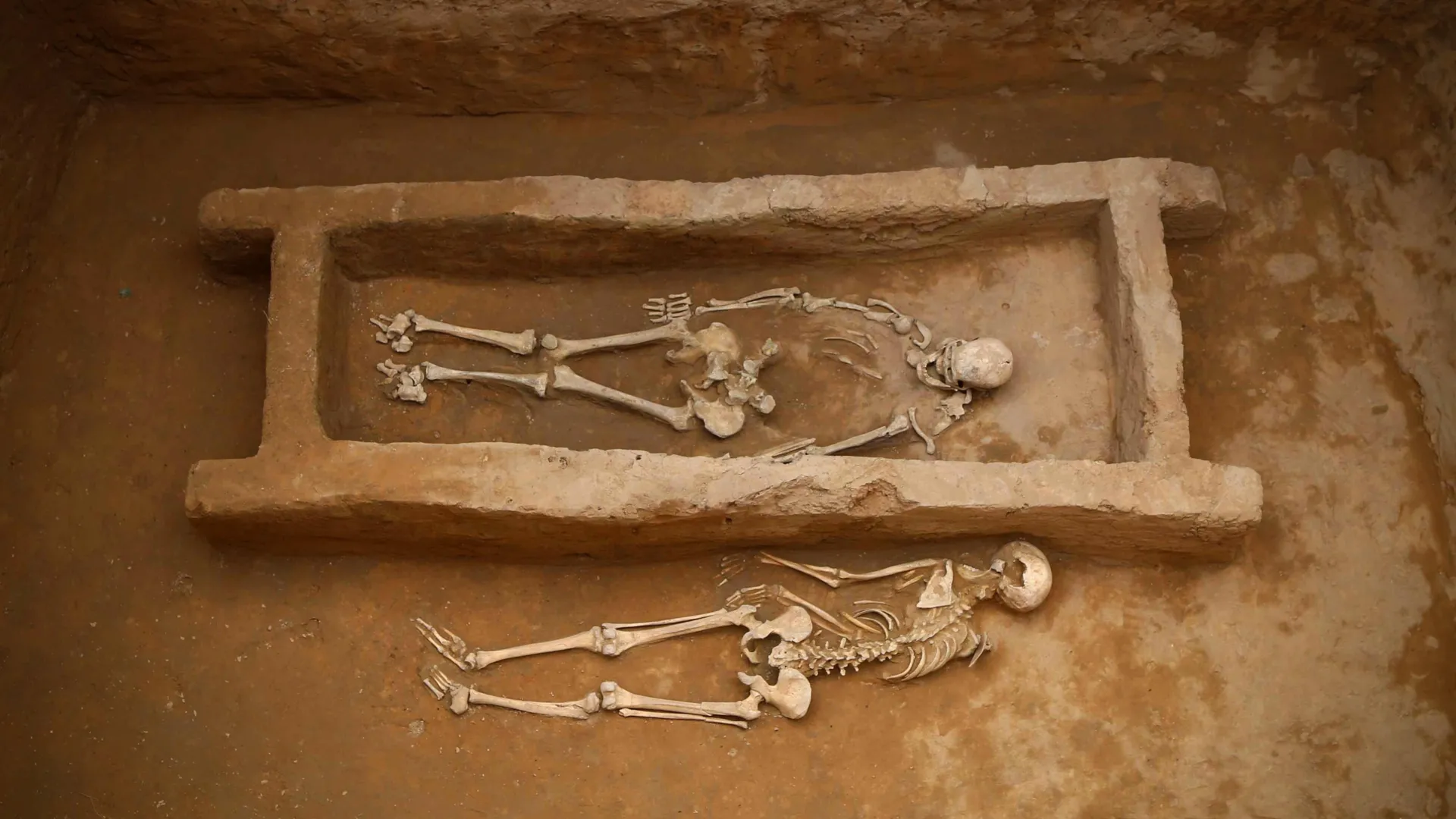
DNA analysis also helped researchers reconstruct family relationships extending across as many as four generations. Around 80 human skulls have been found near Shimao’s East Gate, and the genetic results suggest that social organization involved patrilineal descent, with ancestry and status traced through fathers. The population also appears to have followed patrilocal residence, in which women generally moved to live with or near their male partners’ families.
The study further challenges an earlier interpretation of the sacrificial remains near the East Gate. Instead of most victims being female, nine of the ten burials examined there were male. Male sacrificial remains were concentrated near the East Gate, while female remains were found in elite cemeteries at Huangchengtai and Hanjiagedan. The researchers suggest that this distribution may reflect different selection practices or ceremonies, although the precise meanings of those patterns remain interpretive.
Together, the results provide direct genetic evidence for examining inheritance, ruling families and social divisions at Shimao. They also indicate both long-term local continuity and connections with distant communities during the development of early complex societies in East Asia.