
Archaeology.Today
Field Report

DNA Recovered From Historic Parchment Without Damaging Manuscripts

Researchers tested a dry-brush technique on 91 manuscripts at Duke University, recovering cellular material for genetic analysis without visibly harming the documents. The method could help investigate manuscript origins, trade, livestock history and agricultural change across roughly 1,300 years of records.

September 8, 2026
1 Source
DNA Recovered From Historic Parchment Without Damaging Manuscripts
The Story

Researchers have demonstrated a nondestructive method for recovering genetic material from historic parchment, potentially turning centuries-old manuscripts into sources of evidence about both documents and the animals used to make them.

The technique was tested on 91 manuscripts held in the Rubenstein Library at Duke University. The documents originated from locations ranging from England to Ethiopia and date from the late eighth century through the early 20th century.

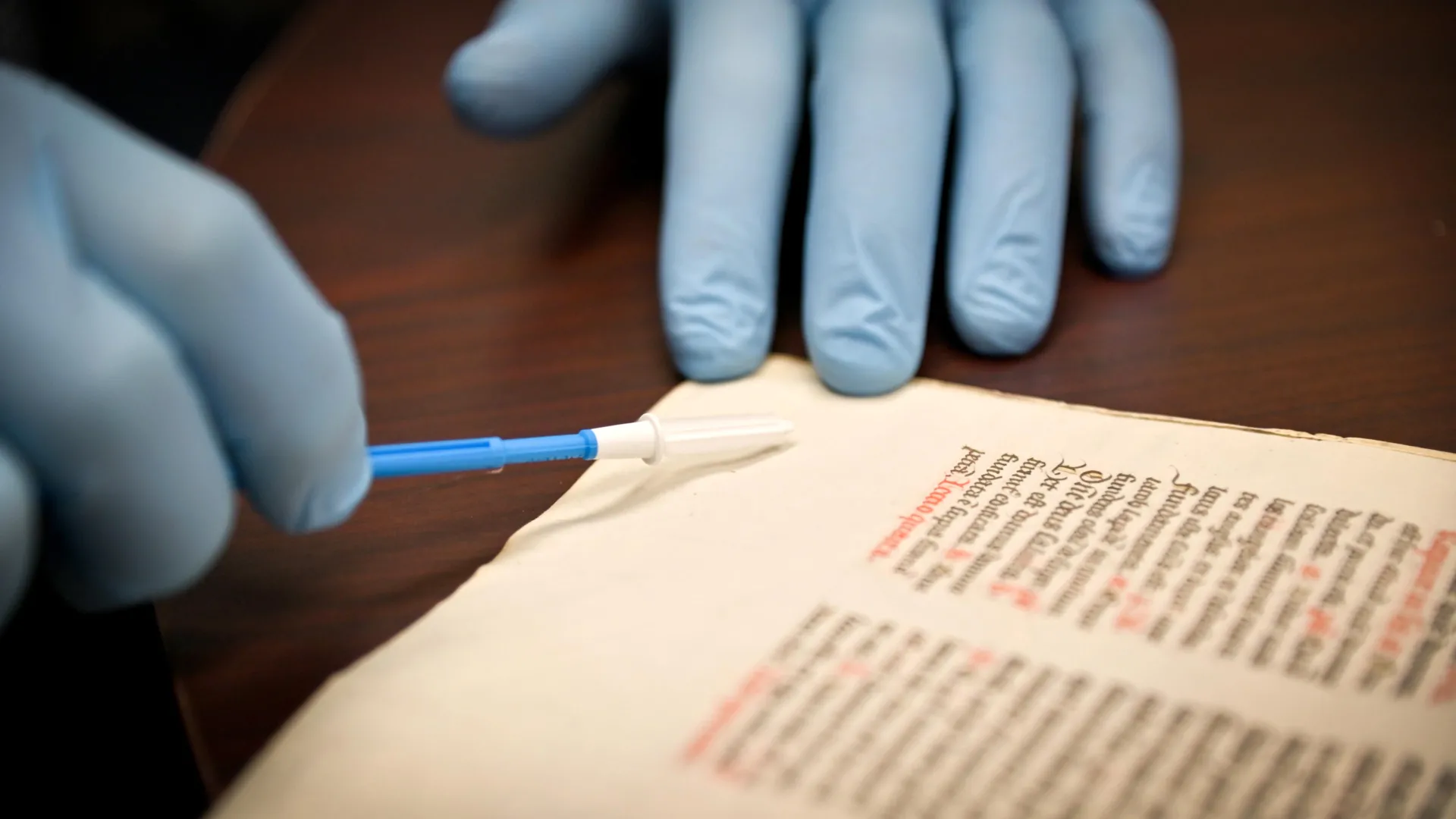
Parchment is made from animal skin, meaning that cellular material can remain alongside writing, maps and other records on its surface. To collect it, researchers gently rubbed each document with a dry cytology brush—the type of brush also used for Pap smears. The team then removed the collected material and applied next-generation sequencing methods to isolate and amplify genetic sequences.

According to the research report from North Carolina State University, the sampling did not damage the manuscripts. That result addresses a central difficulty in parchment research: libraries, museums and other collections may be reluctant to permit sampling when it could permanently harm culturally important objects.

The recovered DNA could provide information about the animals whose skins became parchment and, potentially, about the history of domesticated species. Researchers say future analyses could examine how livestock breeds developed, how farm animals changed over time and what diseases affected them.

Genetic evidence may also help investigate where and when individual manuscripts were produced. Because parchment was used across Europe, the Middle East and parts of Africa for many centuries, the material could contribute to research on trade routes, agricultural practices and everyday life, alongside the historical information recorded in the texts themselves.

The researchers describe historic parchment as a largely unexplored source that brings genetic analysis into conversation with medieval history, archaeology and other fields. The study, “Adventures in the Animal Archive: New Techniques for the Genetic Analysis of Parchment Manuscripts,” was published in Manuscript Studies: A Journal of the Schoenberg Institute for Manuscript Studies. The authors include researchers from North Carolina State University, Duke University and Western Sydney University.
Reference Desk

Sources & Further Reading

Continue Exploring

Related Archaeology

More stories
Elephant Bone Tool from Boxgrove Dates to Nearly 500,000 Years Ago
01
Artifacts
Score 65

Elephant Bone Tool from Boxgrove Dates to Nearly 500,000 Years Ago

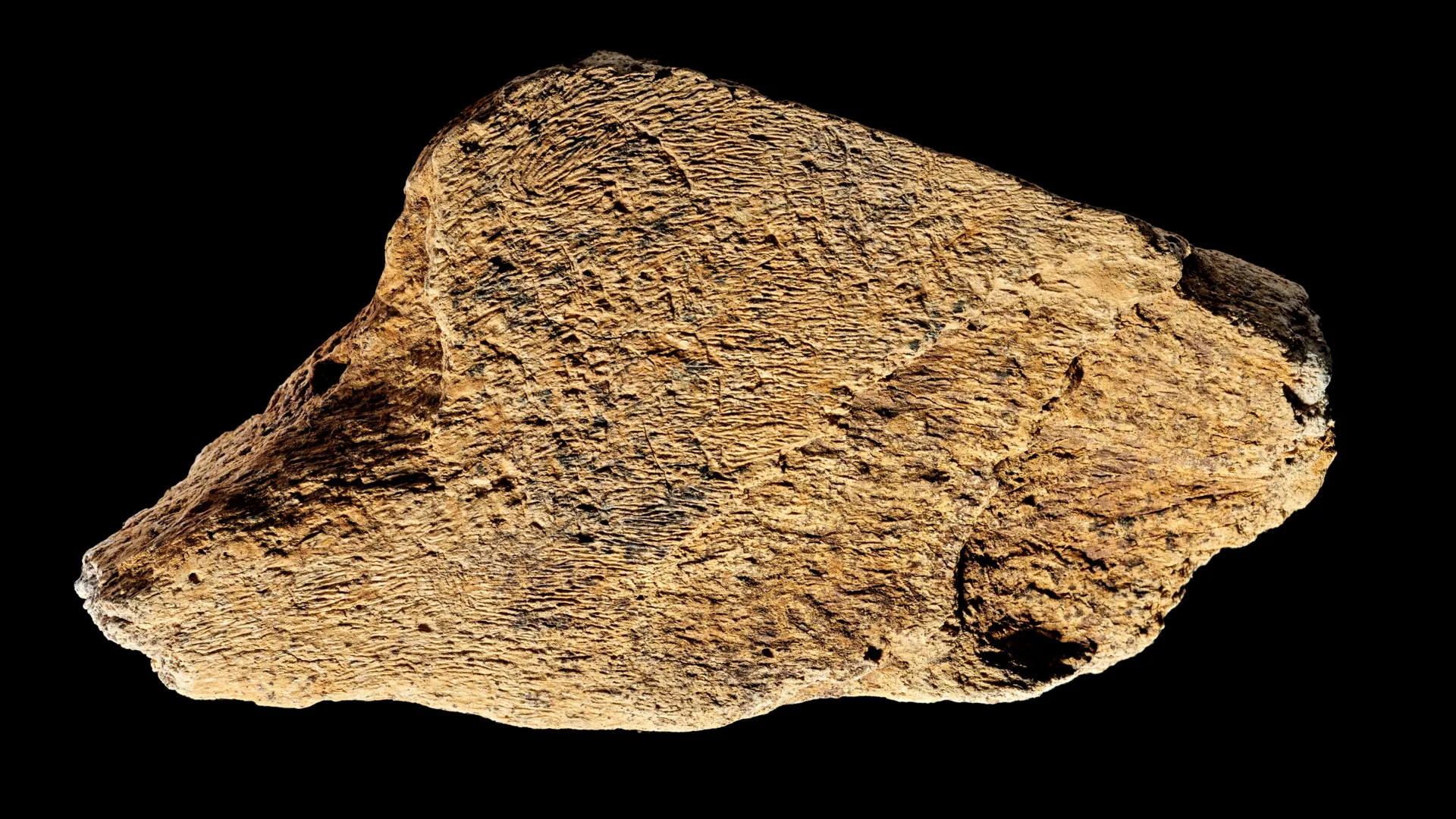
Researchers have identified a shaped elephant or mammoth bone fragment from Boxgrove in southern England as a reusable tool for retouching stone handaxes. The artifact, analyzed with 3D scanning and microscopy, is described as the oldest known elephant-bone tool in Europe.

Read story
Possible 5,500-Year-Old Megalithic Tomb Investigated in Western Poland
02
Archaeological Science
Score 40

Possible 5,500-Year-Old Megalithic Tomb Investigated in Western Poland

Archaeologists are excavating an elongated earthwork near Wyrzecz in Greater Poland that is believed to be a 5,500-year-old tomb associated with the Funnel Beaker culture. LiDAR, geophysical surveys, construction stones and pottery have strengthened the identification, although only a small section has been examined.

Read story
Excavations Recast the Date of Galich’s Lost Lower Fortress
03
Archaeological Science
Score 40

Excavations Recast the Date of Galich’s Lost Lower Fortress

LiDAR mapping and 2026 excavations at Galich’s Lower Settlement found defensive earthworks and artifacts mainly dating to the 14th and 15th centuries. The evidence challenges its traditional identification as a 12th-century fortress and points instead to construction around the mid-15th century, possibly amid a dynastic conflict.

Read story
Bronze-Casting Mould and Weapons Found at Tatarstan Pyanobor Site
04
Excavations
Score 20

Bronze-Casting Mould and Weapons Found at Tatarstan Pyanobor Site

Excavations at the Kipchak Archaeological Complex in Russia’s Tatarstan have yielded a bronze-casting mould, bronze and iron arrowheads, a spearhead, jewellery and decorated pottery. Kazan Federal University archaeologists say the finds may help investigate the debated origins of the Pyanobor culture.

Read story
Villa Complex and 84-Square-Metre Mosaic Found in Eastern Türkiye
05
Excavations
Score 20

Villa Complex and 84-Square-Metre Mosaic Found in Eastern Türkiye

A farmer’s discovery of mosaic remains in Salkaya village led to excavations revealing a settlement with a villa, bathhouse, church, grain-storage area and child’s grave. Archaeologists date the complex to the Late Roman and Early Byzantine periods, but its original owner remains unknown.

Read story
Bear Claws Found in Sixth-Century Elite Burials Near Kaliningrad
06
Artifacts
Score 20

Bear Claws Found in Sixth-Century Elite Burials Near Kaliningrad

Archaeologists identified brown bear claw bones in seven cremation burials on the Kaliningrad Peninsula, including one grave containing 12 claws. The graves also held weapons, precious-metal jewelry, horses and other elaborate goods, suggesting that the burials marked elevated social status, although the precise role of the bear remains is uncertain.

Read story