Archaeology.Today
Field Report

Elephant Bone Tool from Boxgrove Dates to Nearly 500,000 Years Ago

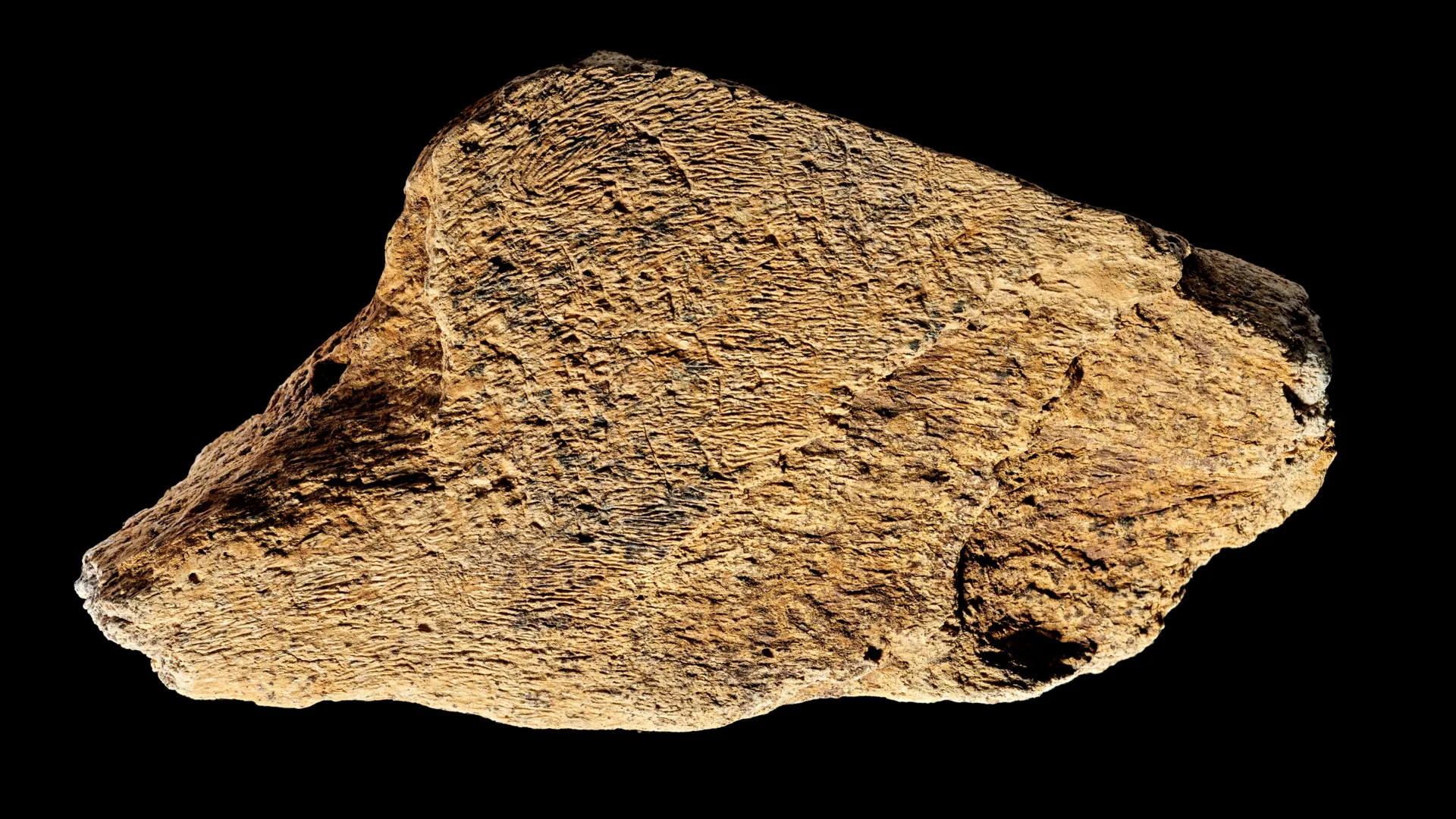
Researchers have identified a shaped elephant or mammoth bone fragment from Boxgrove in southern England as a reusable tool for retouching stone handaxes. The artifact, analyzed with 3D scanning and microscopy, is described as the oldest known elephant-bone tool in Europe.

September 8, 2026
1 Source
Boxgrove Archaeological Site
Elephant Bone Tool from Boxgrove Dates to Nearly 500,000 Years Ago
The Story

A fragment of elephant or mammoth bone recovered at Boxgrove in West Sussex was used nearly 500,000 years ago to sharpen and repair stone tools, according to research by scientists from University College London and the Natural History Museum in London.

The artifact is roughly triangular and measures about 11 centimeters long, six centimeters wide and three centimeters thick. Although it was found during work at the site in the early 1990s, its function was not recognized at the time. A recent examination identified deliberate shaping and damage consistent with repeated use as a hammering implement.

Researchers used 3D scanning and electron microscopy to study the object. The analysis revealed notches, impact damage and small pieces of flint embedded in its surface. These traces indicate that the bone was used to strike the edges of stone tools, removing small flakes and restoring their cutting surfaces. Archaeologists call an implement used for this purpose a retoucher.

Because the object is made largely of thick cortical bone, the researchers believe it came from an elephant or mammoth. Too little of the original material survives to identify the species or the specific skeletal element. The bone was probably relatively fresh when it was shaped, based on damage and deformation observed on the fragment.

The tool was likely made by early Neanderthals or Homo heidelbergensis, although the available evidence does not establish which group produced it. Researchers also cannot determine whether the animal was hunted or whether its bone was collected from a carcass that had already died.

The finding is notable because elephant-bone tools are exceptionally uncommon in Europe. Before the Boxgrove discovery, no European example was known to be older than approximately 450,000 years, and early examples were concentrated farther south. The researchers say the artifact expands the known geographical and chronological range of elephant-bone technology in Europe.

Its use also suggests that the toolmakers recognized the advantages of a rare material. Dense elephant bone could withstand repeated impacts while providing a softer surface than stone, allowing more controlled work on stone-tool edges. The study, published in Science Advances, presents the object as evidence that early humans in Britain selected and shaped specialized materials for maintaining complex stone implements.

Reference Desk

Sources & Further Reading

Continue Exploring

Related Archaeology

More stories
Neanderthal DNA Pattern Does Not Prove Prehistoric Romance
01
Human Origins
Score 65

Neanderthal DNA Pattern Does Not Prove Prehistoric Romance

An analysis of Neanderthal ancestry on the X chromosome has been interpreted as potentially consistent with partner preference, but the genetic pattern may also reflect biology, migration or social organization. Evidence from Neanderthal sites in Spain and Belgium points to more complex possibilities.

Read story
DNA Recovered From Historic Parchment Without Damaging Manuscripts
02
Archaeological Science
Score 65

DNA Recovered From Historic Parchment Without Damaging Manuscripts

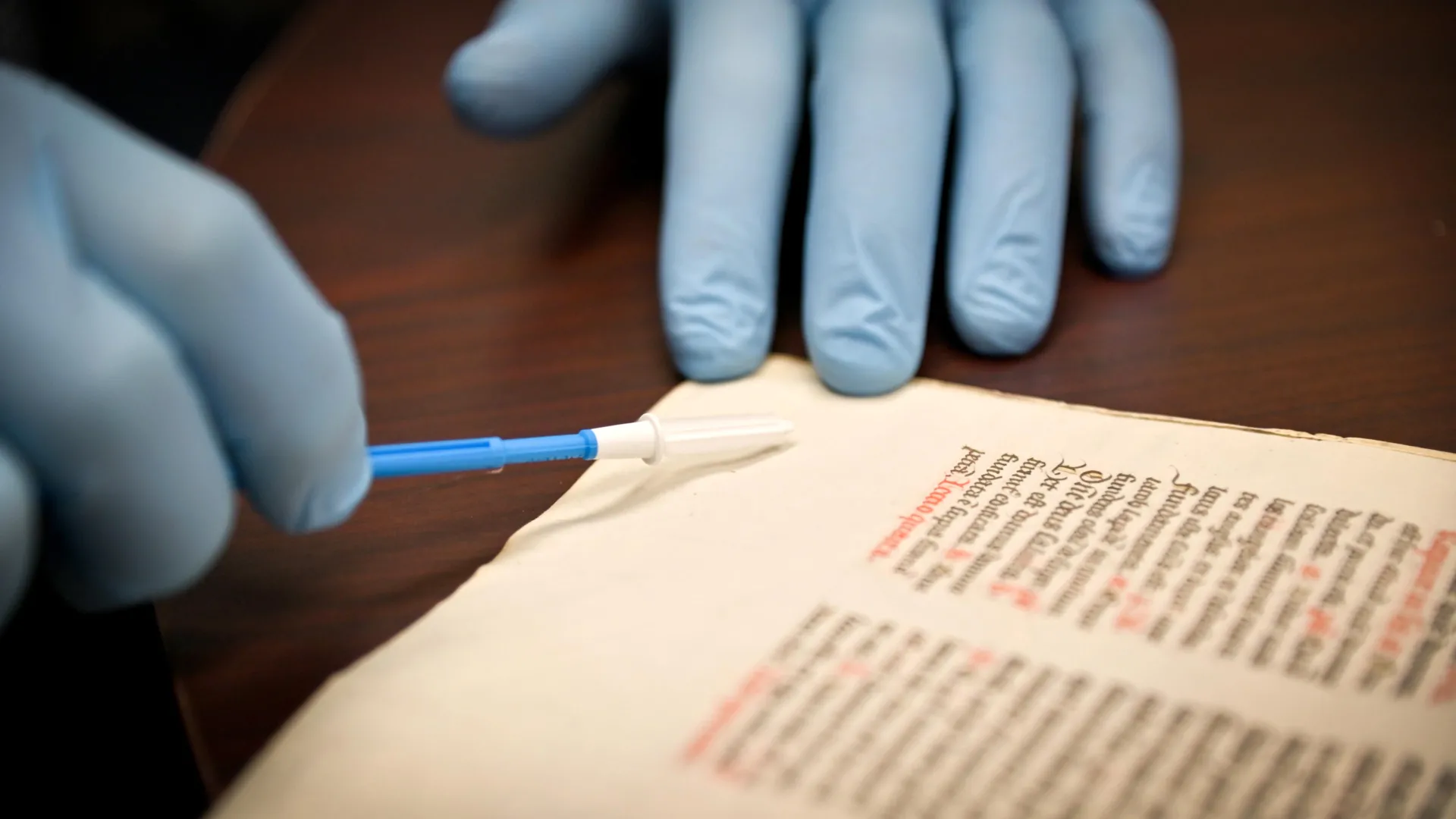
Researchers tested a dry-brush technique on 91 manuscripts at Duke University, recovering cellular material for genetic analysis without visibly harming the documents. The method could help investigate manuscript origins, trade, livestock history and agricultural change across roughly 1,300 years of records.

Read story
Ancient DNA Tracks Population Replacement at French Megalithic Tomb
03
Bioarchaeology
Score 55

Ancient DNA Tracks Population Replacement at French Megalithic Tomb

DNA from 132 people buried at a megalithic tomb near Bury, north of Paris, indicates a sharp population break around 3000 BC. Researchers found evidence of disease and severe mortality, but say the collapse likely resulted from several interacting pressures rather than plague alone.

Read story
Bronze-Casting Mould and Weapons Found at Tatarstan Pyanobor Site
04
Excavations
Score 20

Bronze-Casting Mould and Weapons Found at Tatarstan Pyanobor Site

Excavations at the Kipchak Archaeological Complex in Russia’s Tatarstan have yielded a bronze-casting mould, bronze and iron arrowheads, a spearhead, jewellery and decorated pottery. Kazan Federal University archaeologists say the finds may help investigate the debated origins of the Pyanobor culture.

Read story
Villa Complex and 84-Square-Metre Mosaic Found in Eastern Türkiye
05
Excavations
Score 20

Villa Complex and 84-Square-Metre Mosaic Found in Eastern Türkiye

A farmer’s discovery of mosaic remains in Salkaya village led to excavations revealing a settlement with a villa, bathhouse, church, grain-storage area and child’s grave. Archaeologists date the complex to the Late Roman and Early Byzantine periods, but its original owner remains unknown.

Read story
Bear Claws Found in Sixth-Century Elite Burials Near Kaliningrad
06
Artifacts
Score 20

Bear Claws Found in Sixth-Century Elite Burials Near Kaliningrad

Archaeologists identified brown bear claw bones in seven cremation burials on the Kaliningrad Peninsula, including one grave containing 12 claws. The graves also held weapons, precious-metal jewelry, horses and other elaborate goods, suggesting that the burials marked elevated social status, although the precise role of the bear remains is uncertain.

Read story