Archaeology.Today
Field Report

6,500-Year-Old Czech Enclosure May Have Marked Solar and Lunar Cycles

Archaeologists studying a 230-meter prehistoric enclosure near Chleby say its 12 entrances may have created sightlines to important positions of the Sun and Moon. The monument, dated through organic material, appears to predate major Stonehenge construction phases by more than 1,000 years.

September 8, 2026
1 Source
Chleby enclosure
6,500-Year-Old Czech Enclosure May Have Marked Solar and Lunar Cycles
The Story

A vast prehistoric enclosure near Chleby in the Czech Republic may have served as a ceremonial site designed around movements of the Sun and Moon, archaeologists reported. Dating of organic material indicates that the approximately 6,500-year-old monument was built more than 1,000 years before the major construction phases of Stonehenge.

The nearly circular enclosure measures about 230 meters across and was surrounded by a ditch more than 2.5 meters deep. Researchers led by the University of West Bohemia identified 12 irregularly spaced entrances around its perimeter. They believe the arrangement was deliberate and may have produced sightlines toward significant astronomical events.

Two observation points are particularly important to the interpretation. One appears to correspond with the Moon’s most extreme positions on the horizon during its roughly 18-year cycle. Another establishes an alignment between sunrise at the summer solstice and sunset at the winter solstice. Researchers note that this arrangement has a broad parallel at Stonehenge, although the evidence does not indicate that the two monuments were directly connected.

Petr Krištuf of the University of West Bohemia, who leads the research, said the entrance geometry suggested that the enclosure was designed to observe key moments in solar and lunar cycles. The findings may indicate that astronomical observations were incorporated into monumental architecture by early farming communities considerably earlier than the best-known phases of Stonehenge.

Other discoveries support a ceremonial interpretation, although the site’s precise uses remain under investigation. Bull skulls and horns were found in the ditch, particularly near the entrances. Archaeologists believe some may once have been displayed on monumental gateways. Jan Turek of Charles University said cattle symbolism was important among early farming communities, but the researchers’ reconstruction of the gateways remains an interpretation.

Human remains also point to the enclosure’s continued significance. Earlier investigations found a later Bronze Age burial associated with the Únětice culture containing approximately 18 people. The individuals appear to have been deposited gradually rather than in one event.

By the Iron Age, the monument seems to have lost its original importance. The ditch was gradually filled, and an ordinary settlement was established on the former sanctuary. Researchers are now analyzing soil samples from the enclosure and surrounding landscape for chemical traces that could help identify activities carried out there and chart changes in the site’s use over time.
Reference Desk

Sources & Further Reading

Continue Exploring

Related Archaeology

More stories
Ancient Sardis Added to UNESCO World Heritage List After Decades of Excavation
01
Heritage
Score 110

Ancient Sardis Added to UNESCO World Heritage List After Decades of Excavation

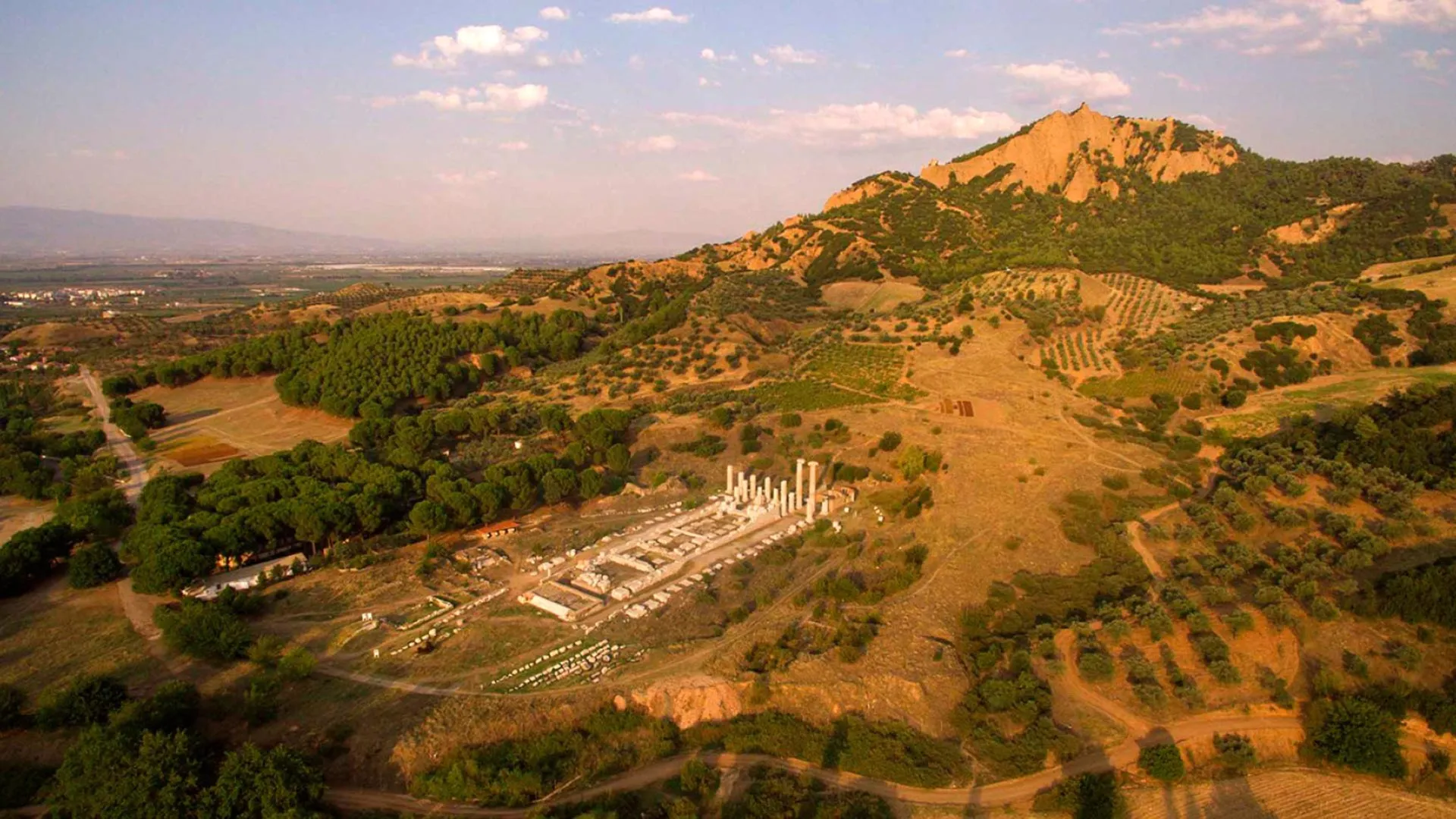
Sardis, an ancient city in western Turkey excavated continuously since 1958, has been added to the UNESCO World Heritage List. Researchers say the designation recognizes decades of archaeological work while highlighting the need to protect the site from erosion, farming damage and looting.

Read story
High-Nickel Rings Point to Meteorite Iron in Bronze Age Greece
02
Artifacts
Score 75

High-Nickel Rings Point to Meteorite Iron in Bronze Age Greece

A study of 91 ancient iron objects from Greece found unusually high nickel levels in 13 rings and ring fragments. Researchers say at least 10 were probably made from meteoritic iron, with many discovered in wealthy tombs linked to Mycenaean elites.

Read story
Wolves on Swedish Island Point to Prehistoric Human Management
03
Discoveries
Score 75

Wolves on Swedish Island Point to Prehistoric Human Management

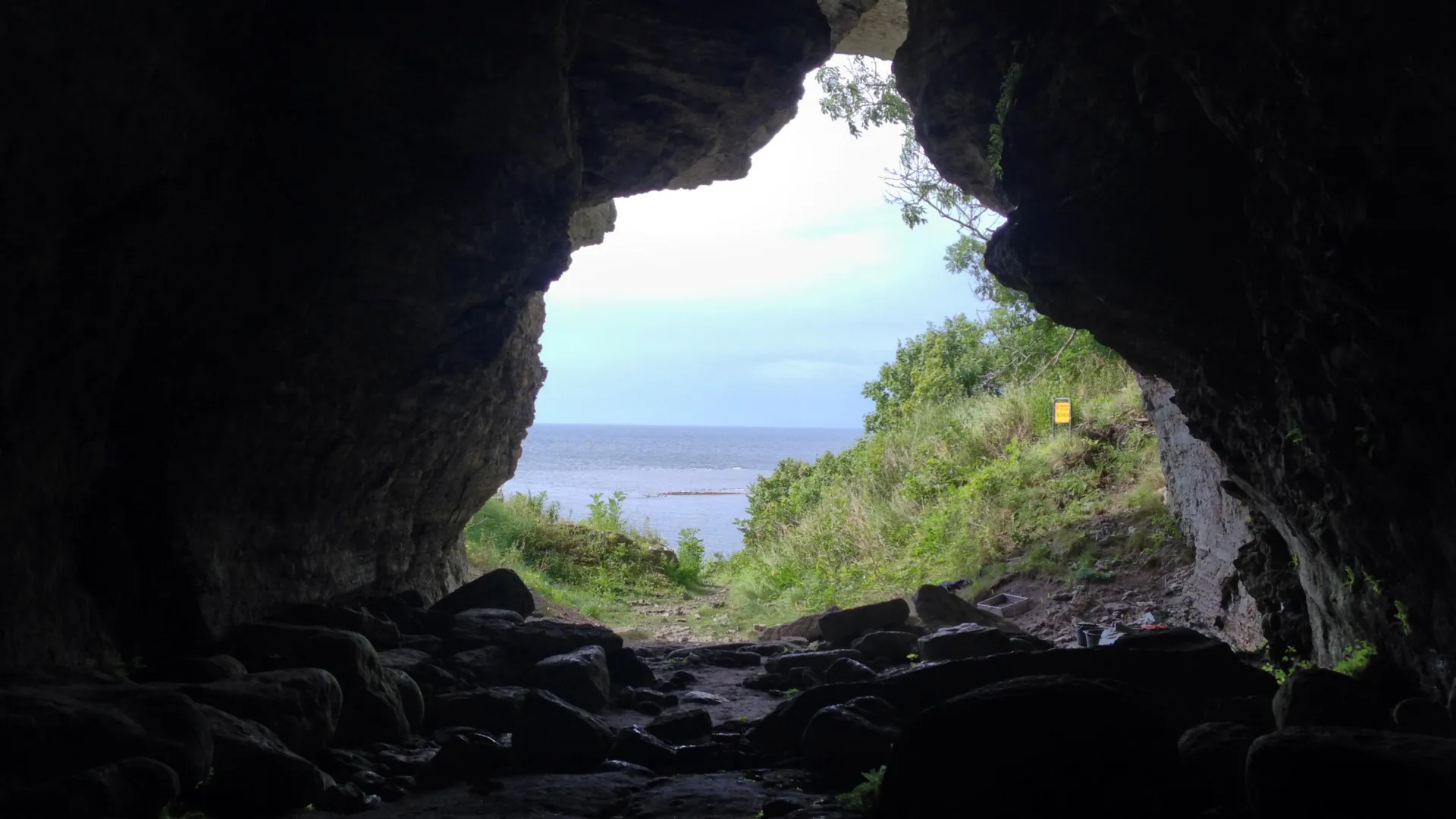
Wolf remains from Stora Karlsö, a small Baltic island with no native land mammals, date to roughly 3,000–5,000 years ago. Genetic, dietary and skeletal evidence suggests people transported the animals by boat and may have fed or cared for them without fully domesticating them.

Read story
Excavation in Tonnerre Reveals 1,500 Years of Hilltop Settlement
04
Excavations
Score 75

Excavation in Tonnerre Reveals 1,500 Years of Hilltop Settlement

An Inrap excavation on Montbellant hill in northern France has uncovered medieval buildings, Roman-period remains and evidence of a first-century BC Gallic oppidum. The layered site, investigated ahead of house construction, is helping archaeologists trace the development of Tonnerre’s upper town.

Read story
Bronze-Casting Mould and Weapons Found at Tatarstan Pyanobor Site
05
Excavations
Score 20

Bronze-Casting Mould and Weapons Found at Tatarstan Pyanobor Site

Excavations at the Kipchak Archaeological Complex in Russia’s Tatarstan have yielded a bronze-casting mould, bronze and iron arrowheads, a spearhead, jewellery and decorated pottery. Kazan Federal University archaeologists say the finds may help investigate the debated origins of the Pyanobor culture.

Read story
Villa Complex and 84-Square-Metre Mosaic Found in Eastern Türkiye
06
Excavations
Score 20

Villa Complex and 84-Square-Metre Mosaic Found in Eastern Türkiye

A farmer’s discovery of mosaic remains in Salkaya village led to excavations revealing a settlement with a villa, bathhouse, church, grain-storage area and child’s grave. Archaeologists date the complex to the Late Roman and Early Byzantine periods, but its original owner remains unknown.

Read story