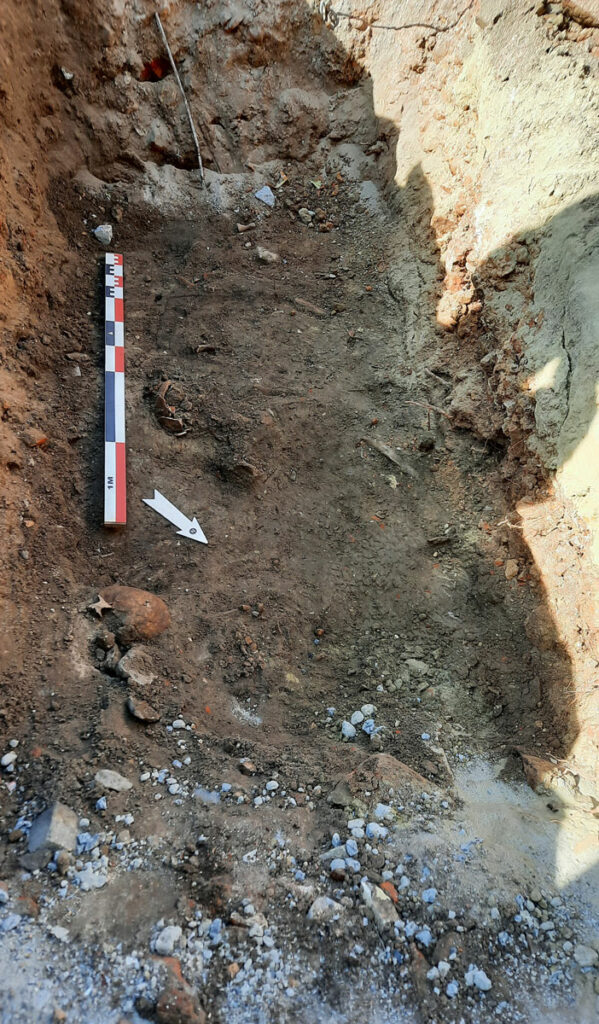
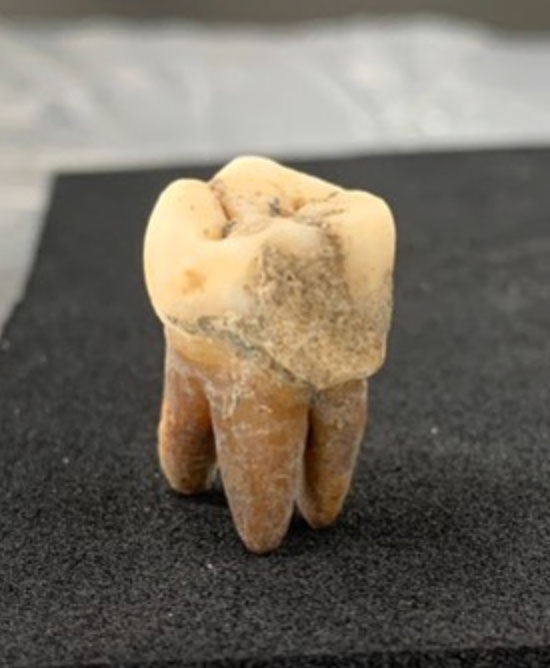
Researchers have reconstructed aspects of diet in premodern Osaka by examining dental calculus from eight sets of human remains excavated at the Umeda cemetery. The individuals lived in an urban setting during Japan’s Edo period, which lasted from A.D. 1603 to 1868.
The study was conducted by researchers from the Graduate University for Advanced Studies (SOKENDAI), Aomori Public University, and Kyushu University. They combined analysis of bone collagen stable isotope ratios with palaeoproteomic examination of food-derived proteins preserved in hardened dental plaque.
The results point to a broad range of foods. Researchers identified 38 different dietary proteins representing nine species of fish, along with proteins from several land and marine mammals and multiple types of plants. Six of the individuals had consumed red sea bream (Pagrus major), a fish described in historical sources as a luxury food. Proteins from tonguefish and other flatfish were also detected.
Some of the remains contained evidence of cold-water fish. Because these fish do not live in nearby Osaka Bay, the researchers said they were likely brought to the area through Japan’s coastal shipping routes. The analysis also identified proteins from cotton seeds, which were probably cultivated locally and consumed as cottonseed oil.
According to a statement from SOKENDAI reported by Archaeology Magazine, the dietary evidence reflects Osaka’s role as a center for producing and redistributing food products across western Japan. The findings indicate access to foods from both local sources and wider coastal exchange networks, although the samples represent only the eight individuals examined.
The researchers plan to extend the work by analyzing dental calculus from samurai, rural residents, and people who lived in other parts of Japan. Those comparisons may help clarify how diet varied by occupation, environment, and region during the premodern period.