
Archaeology.Today
Field Report

Study Examines Unusual 17th-Century Burial in Pień, Poland

A multidisciplinary study of Grave 75 at a cemetery in Pień examines the remains of a woman who died at about 17–19 years old. A sickle placed across her neck and a padlock fixed to her toe suggest measures intended to prevent the dead from returning, although researchers frame the burial within historical beliefs and social fears.

September 1, 2026
1 Source
Pień cemetery
Study Examines Unusual 17th-Century Burial in Pień, Poland
The Story

Researchers are using archaeological, chemical and genetic evidence to investigate an unusual burial discovered in 2022 at a cemetery in Pień, north-central Poland. Known as Grave 75, it contained the remains of a young woman buried with a curved iron sickle positioned over her neck and a triangular padlock attached to the big toe of her left foot.

The woman died at approximately 17–19 years old. Radiocarbon analysis indicates that she was most likely buried between 1620 and 1674 CE, a range assigned a 52.6% probability. The study, published in the Journal of Archaeological Science: Reports, was conducted by researchers from the Institute of Archaeology at Nicolaus Copernicus University and used evidence from the grave, skeleton, textiles, DNA and isotopes.

The arrangement of the burial is consistent with practices sometimes described as anti-vampiric or anti-demonic. Such treatments were intended to prevent the dead from rising or harming the living. The researchers found that the grave soil had been disturbed and mixed, and that the body was probably moved before decomposition was complete. They suggest the grave may have been reopened so that the woman’s left arm could be pulled toward the northeast and the sickle placed with its blade facing her throat. The sickle’s decayed handle was made from birch wood, which the study associates with historical protective beliefs.

Small metallic threads near the woman’s skull were identified as pure silver and gold-gilded wire from a luxurious silk headwear cap. These materials suggest she came from a wealthy family, although chemical evidence also placed her among cemetery adults with very low consumption of animal protein, possibly indicating periods of malnutrition.

DNA analysis assigned her maternal lineage to haplogroup J1c2c1, described as rare and associated with origins in Scandinavia but virtually absent among modern Slavic populations. Isotope results from her childhood teeth, however, indicate that she grew up locally in Pień.

A green stain on her palate and neck bones may have resulted from a copper-containing object or medicinal substance placed deep in her mouth or nasal passage, the researchers propose. Tests did not support the initial possibility that the stain came from a coin.

The cemetery itself was absent from historical maps and contained no Catholic crosses or devotional objects. Its location near a crossroads, away from the village, led the researchers to suggest it may have been a cemetery for people feared or rejected by the community. They present Grave 75 as evidence of social anxieties and protective beliefs in 17th-century Poland, while acknowledging that the burial’s precise circumstances cannot be recovered from archaeology alone.
Reference Desk

Sources & Further Reading

Continue Exploring

Related Archaeology

More stories
Polish Junkyard Find May Be Part of a Vandal Warrior’s Cremation Burial
01
Discoveries
Score 65

Polish Junkyard Find May Be Part of a Vandal Warrior’s Cremation Burial

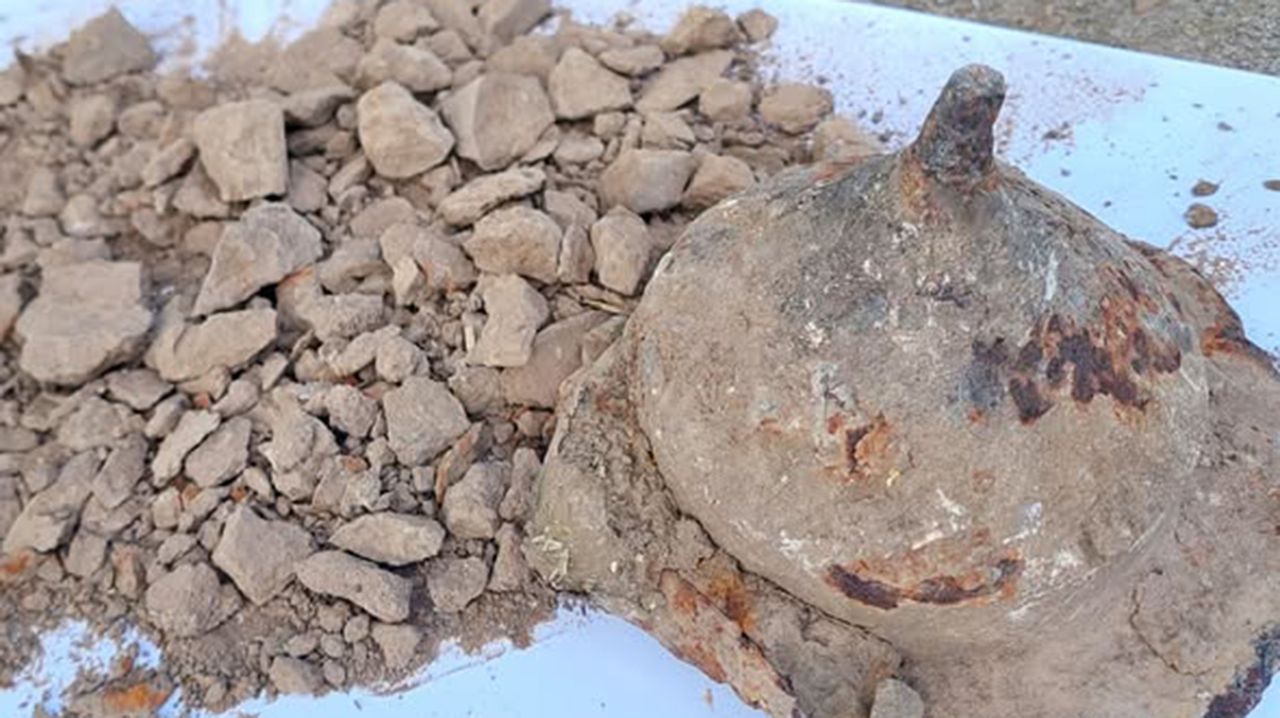
A man searching for car parts near Hrubieszów found an iron shield boss estimated to be about 1,800 years old. Examination of earth trapped inside revealed cremated bones, leading archaeologists to identify the object as a possible remnant of a Vandal warrior’s burial.

Read story
LiDAR Study Finds Ancient Maya Land Use Still Shapes Belize Forests
02
Archaeological Science
Score 20

LiDAR Study Finds Ancient Maya Land Use Still Shapes Belize Forests

A study of LiDAR data from northern Belize has identified links between forest structure and ancient Maya canals, settlements, buildings, and upland walls. The strongest relationship appeared around former wetland agricultural fields, although researchers say broader surveys are needed to determine how widely the pattern extends.

Read story
Wallaby-Tooth Ornaments Identified at Queensland Rock Shelter
03
Discoveries
Score 20

Wallaby-Tooth Ornaments Identified at Queensland Rock Shelter

Twelve wallaby teeth found at Windmill Way in Queensland were mounted with plant resin, indicating they may once have formed part of a necklace or headband. The assemblage is described as the first such find from Cape York Peninsula and the only known example of this type found outside burials in northeastern Australia.

Read story
Fragments Reveal Previously Unknown Fourth-Century Roman Law Book
04
Artifacts
Score 20

Fragments Reveal Previously Unknown Fourth-Century Roman Law Book

A University of Cincinnati scholar and the Penn Museum have joined 50 animal-skin fragments into a double-sided page from a late-fourth-century Roman legal text. The Latin manuscript discusses taxation and public infrastructure but does not match any previously known imperial legal code.

Read story
Medieval Manuscript Fragments Illuminate Guernsey’s Literary Past
05
Artifacts
Score 20

Medieval Manuscript Fragments Illuminate Guernsey’s Literary Past

Seventeen fragments reused in early modern administrative bindings provide the first substantial evidence of medieval books and reading on Guernsey. Six are written in French, including a rare passage from a dramatic Griselda poem that survives in only one other manuscript.

Read story
Historic Sulfur Emissions Linked to Porosity in Murujuga Rock Art
06
Discoveries
Score 20

Historic Sulfur Emissions Linked to Porosity in Murujuga Rock Art

A three-year monitoring program in Western Australia identifies historic sulfur dioxide emissions and resulting acid rain as the strongest explanation for increased porosity in rock surfaces near industrial areas of Murujuga. Researchers say current pollution has not been shown to accelerate deterioration, while further work will examine microbial and atmospheric factors.

Read story