Archaeology.Today
Field Report

Medieval Manuscript Fragments Illuminate Guernsey’s Literary Past

Seventeen fragments reused in early modern administrative bindings provide the first substantial evidence of medieval books and reading on Guernsey. Six are written in French, including a rare passage from a dramatic Griselda poem that survives in only one other manuscript.

September 1, 2026
1 Source
Medieval Manuscript Fragments Illuminate Guernsey’s Literary Past
The Story

Seventeen medieval manuscript fragments identified in Guernsey are offering new evidence of the island’s literary and intellectual life, a period for which almost no comparable material had previously survived.

The fragments were found in the collections of Guernsey’s Island Archives and among records kept in His Majesty’s Greffier’s Strongroom. Centuries ago, pieces of medieval parchment were reused as covers and bindings for early modern notebooks containing administrative records connected with the island’s feudal holdings. That reuse helped preserve the fragments, even as their original manuscripts disappeared.

The material was identified through work by the Island Archives team, manuscript specialist David Rundle of the University of Kent’s Centre for Medieval and Early Modern Studies, and book historian Tamara Atkin of the University of Oxford. Some fragments had been recognized by Guernsey archivists previously, while others were identified more recently. Their significance became clearer when the pieces were studied as a group.

The collection represents the first direct evidence of the books available on medieval Guernsey and the texts circulating among its readers. Most of the fragments are in Latin, but six are in French. The researchers say this suggests that when island residents read vernacular works in the late medieval period, French was more prominent than English. Several fragments come from widely copied works, including the Anglo-Norman “Lumere as lais.”

One particularly unusual fragment belongs to “L’Estoire de Griseldis,” a dramatic poem thought to have been written by Philippe de Mézières around 1395. The work retells the story of Griselda, which had earlier appeared in Giovanni Boccaccio’s “Decameron.” The Guernsey version is known from only one other manuscript and two 16th-century printed editions.

According to the researchers, the fragment shows for the first time that the play circulated beyond the French royal court circles where it most likely began. It may help explain how the story reached a broader audience in the 16th century, while also providing evidence of what texts were read on Guernsey and how they traveled.

Archival assistant Callum Tostevin-Hall discovered one fragment while tracing a 16th-century copy of Guernsey’s 1331 “Extente.” He noticed a reference to a vellum cover and found that it had once been part of a medieval manuscript. Researchers believe further fragments may still be present in archival collections. Island Archives is scheduled to host an academic study day about the discoveries on September 10, 2026.

Reference Desk

Sources & Further Reading

Continue Exploring

Related Archaeology

More stories
Fragments Reveal Previously Unknown Fourth-Century Roman Law Book
01
Artifacts
Score 40

Fragments Reveal Previously Unknown Fourth-Century Roman Law Book

A University of Cincinnati scholar and the Penn Museum have joined 50 animal-skin fragments into a double-sided page from a late-fourth-century Roman legal text. The Latin manuscript discusses taxation and public infrastructure but does not match any previously known imperial legal code.

Read story
Ancient DNA Identifies Cacao Consumption at Georgia’s Etowah Site
02
Bioarchaeology
Score 40

Ancient DNA Identifies Cacao Consumption at Georgia’s Etowah Site

DNA recovered from three pottery fragments indicates that people at the Etowah Mounds consumed cacao during the 11th and 12th centuries. The finding provides evidence of cacao use east of the Mississippi River and points to connections with regions where the tropical plant grew.

Read story
LiDAR Study Finds Ancient Maya Land Use Still Shapes Belize Forests
03
Archaeological Science
Score 20

LiDAR Study Finds Ancient Maya Land Use Still Shapes Belize Forests

A study of LiDAR data from northern Belize has identified links between forest structure and ancient Maya canals, settlements, buildings, and upland walls. The strongest relationship appeared around former wetland agricultural fields, although researchers say broader surveys are needed to determine how widely the pattern extends.

Read story
Wallaby-Tooth Ornaments Identified at Queensland Rock Shelter
04
Discoveries
Score 20

Wallaby-Tooth Ornaments Identified at Queensland Rock Shelter

Twelve wallaby teeth found at Windmill Way in Queensland were mounted with plant resin, indicating they may once have formed part of a necklace or headband. The assemblage is described as the first such find from Cape York Peninsula and the only known example of this type found outside burials in northeastern Australia.

Read story
Polish Junkyard Find May Be Part of a Vandal Warrior’s Cremation Burial
05
Discoveries
Score 20

Polish Junkyard Find May Be Part of a Vandal Warrior’s Cremation Burial

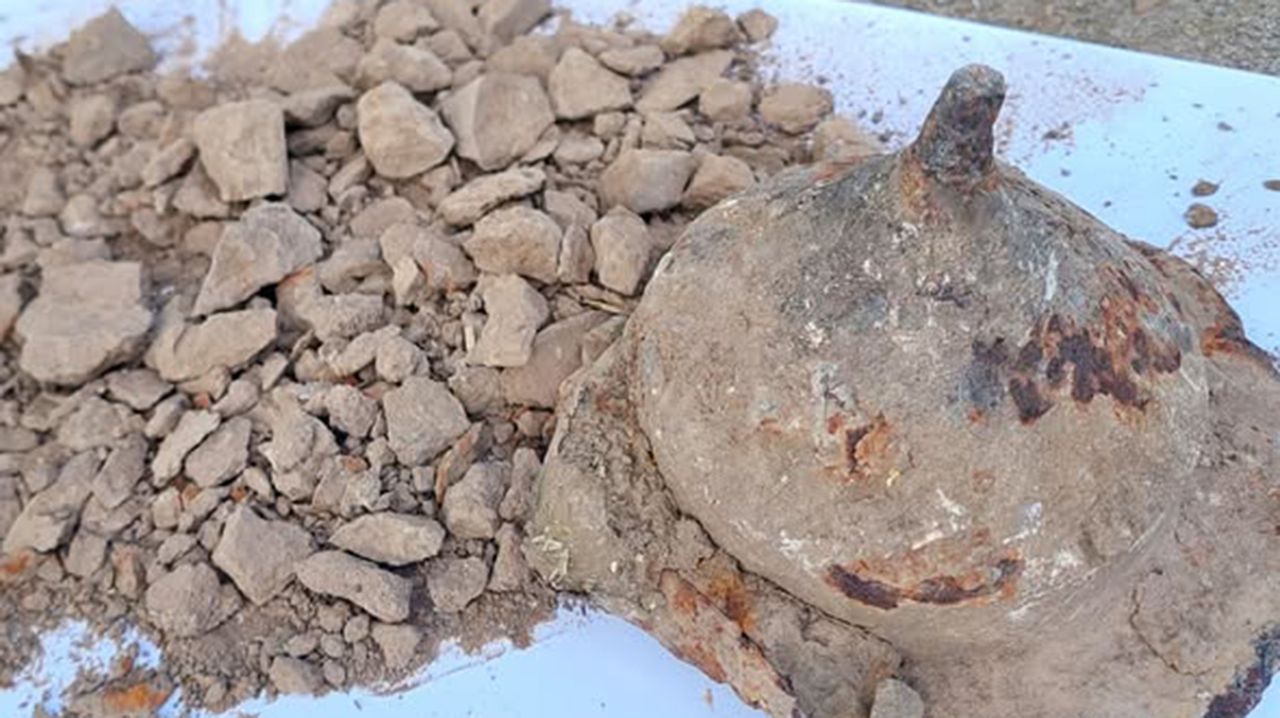
A man searching for car parts near Hrubieszów found an iron shield boss estimated to be about 1,800 years old. Examination of earth trapped inside revealed cremated bones, leading archaeologists to identify the object as a possible remnant of a Vandal warrior’s burial.

Read story
Study Examines Unusual 17th-Century Burial in Pień, Poland
06
Discoveries
Score 20

Study Examines Unusual 17th-Century Burial in Pień, Poland

A multidisciplinary study of Grave 75 at a cemetery in Pień examines the remains of a woman who died at about 17–19 years old. A sickle placed across her neck and a padlock fixed to her toe suggest measures intended to prevent the dead from returning, although researchers frame the burial within historical beliefs and social fears.

Read story