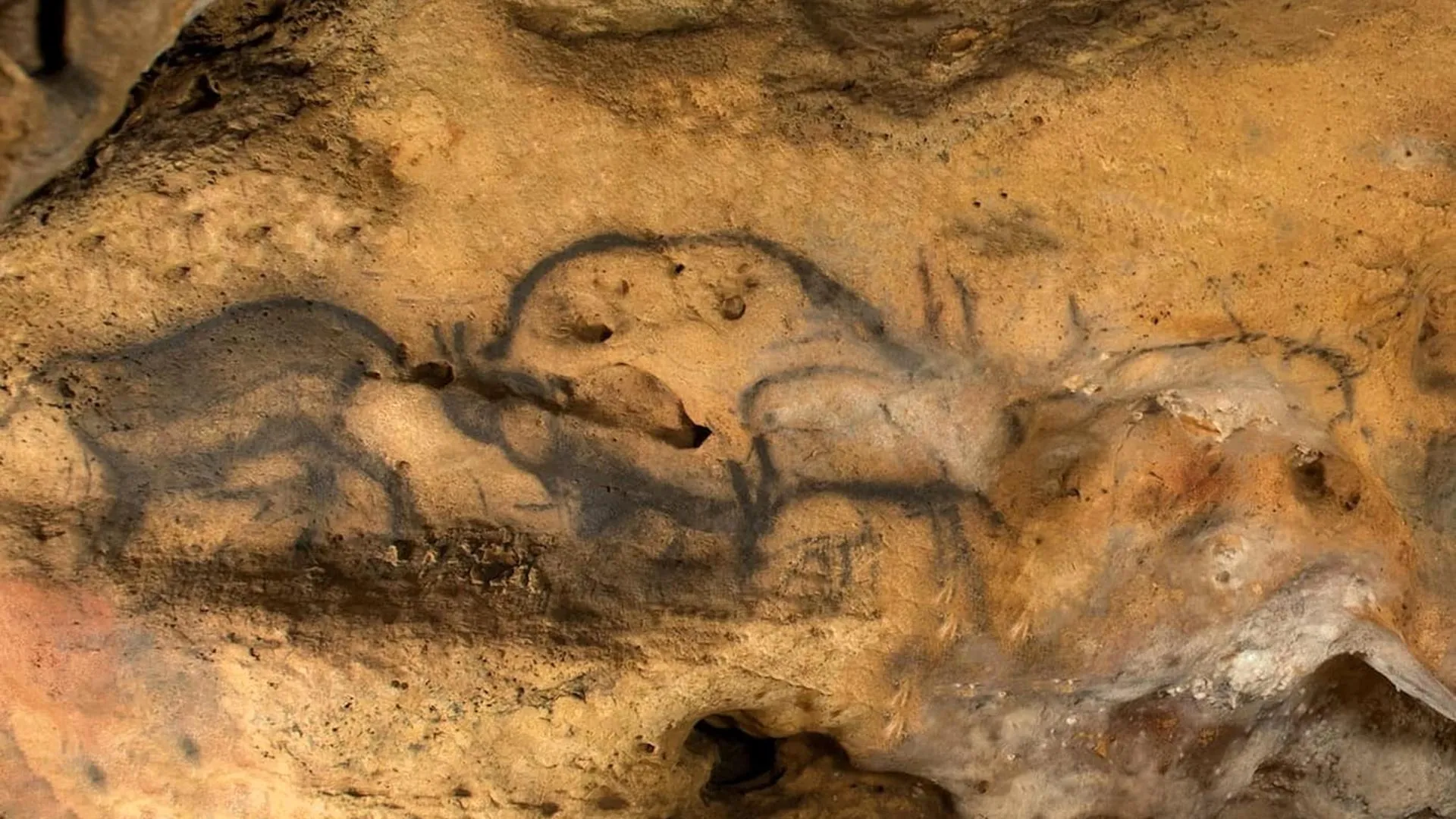
Researchers have directly dated two black figures at Font-de-Gaume, a decorated cave near Les Eyzies in France’s Dordogne region, after finding previously overlooked charcoal within their pigments. The results provide firm dates for a bison and suggest that a mask-like figure was produced or modified during multiple episodes separated by thousands of years.
The study, published in PNAS and reported by ScienceDaily from materials provided by CNRS, challenges the assumption that the cave’s black paintings were made solely from mineral pigments. Iron and manganese oxides can create dark colors but generally contain no carbon, making them unsuitable for radiocarbon dating. Until now, researchers had not conclusively established that the paintings lacked organic carbon.
To investigate, the team examined the bison and mask-like figure using Raman microspectrometry and hyperspectral imaging. These methods identify materials through their chemical and optical properties while causing little noticeable damage to the artwork. Both detected charcoal distributed throughout the figures’ black lines. Researchers said this pattern indicated that the carbon was part of the original pigment rather than later contamination from graffiti, visitors or tourism.
With special authorization, the scientists removed extremely small samples for carbon-14 analysis. The bison was dated to between 13,461 and 13,162 calibrated years before present, or calBP. In this dating system, the reference point is conventionally 1950, and radiocarbon results are calibrated to account for changes in atmospheric carbon-14 over time. The new result places the bison somewhat later than earlier estimates and assigns it to the Upper Paleolithic.
Samples from different parts of the mask-like figure produced three ranges: 8,993–8,590 calBP, 15,981–15,121 calBP, and 15,297–14,246 calBP. These results suggest that the figure may combine elements made at substantially different times rather than representing a single artistic episode.
The research was led by a scientist from Chimie ParisTech-PSL/CNRS/Ministère de la Culture and involved specialists from several French scientific and cultural institutions. The team said that combining chemical imaging with sensitive radiocarbon measurements could help date other prehistoric figures previously considered impossible to analyze directly. Such dates may allow researchers to compare painting episodes and investigate whether decorated caves were revisited and altered by later communities.