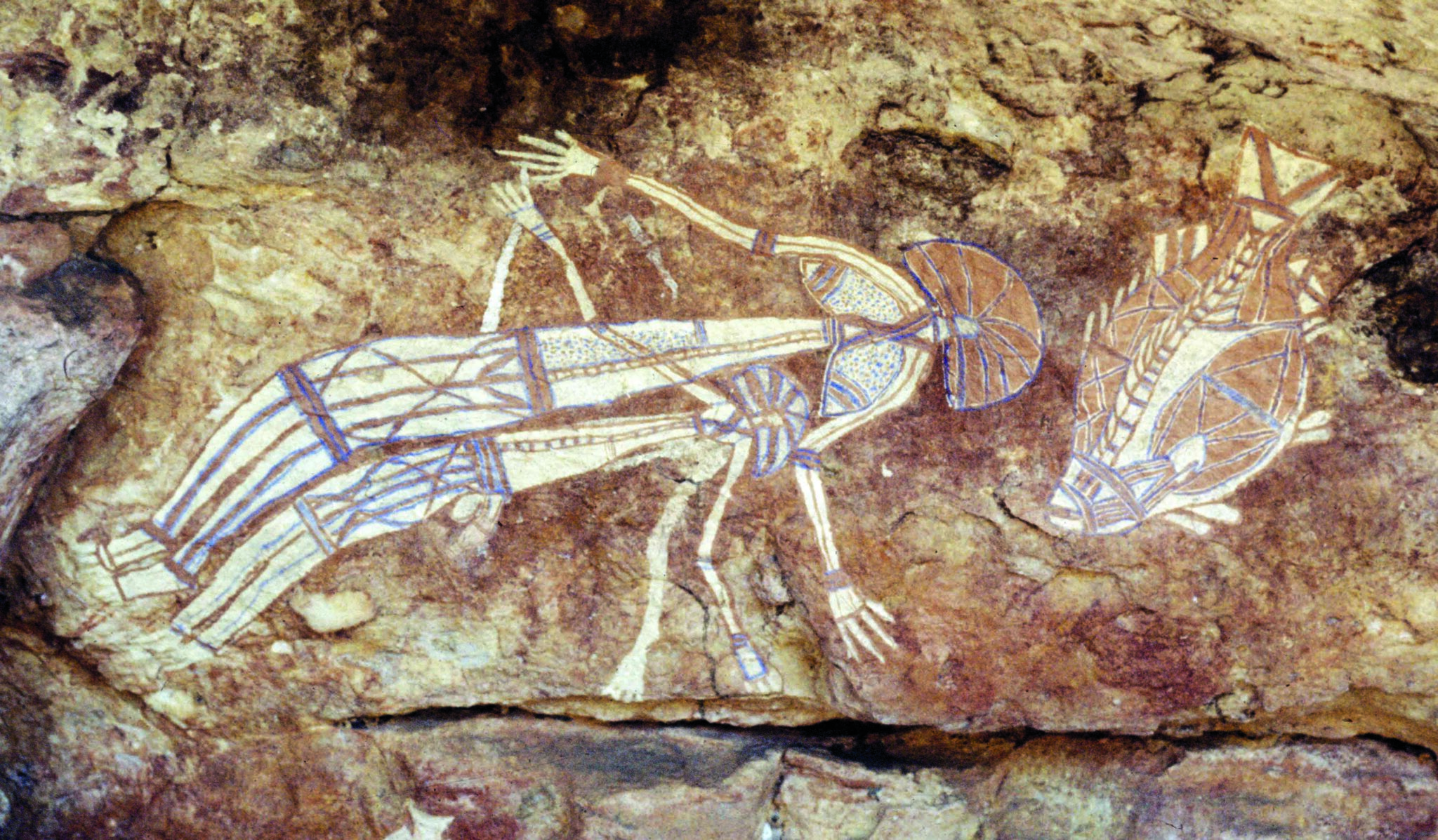
Researchers documenting rock art in western Arnhem Land have recorded exceptionally large images, including Rainbow Serpents about 20 feet long, seven-foot pythons, and life-size crocodiles and kangaroos. A new study suggests that some of the paintings, made during the nineteenth and twentieth centuries, may have been created in response to the changes brought by European colonization.
Archaeologist Paul Taçon of Griffith University and his colleagues worked with senior Amurdak Traditional Owner Charlie Mungulda to record rock art at 165 sites in the Awunbarna region. The area was a meeting place for Aboriginal language groups involved in trade, ceremonies, and other social activities. The colonial buffalo-shooting industry began there in the late nineteenth century, introducing major changes to the region, according to the researchers.
The team identified 29 Rainbow Serpent images at 21 of the sites. Some were painted over earlier artworks using white pipe clay, a material the researchers said fades over the course of a few hundred years. The layering of images provided evidence that the rock art was produced over extended periods rather than as a single body of work.
In Aboriginal traditions described in the study, Rainbow Serpents are ancestral beings associated with the Dreamtime, the past, and the continuing present. They are also connected with change and with learning to manage it. The researchers therefore interpret the large, later images as possible efforts to reinforce cultural traditions during a period of rapid disruption.
Taçon said depictions, stories, and ceremonies involving the Rainbow Serpent may have offered Aboriginal communities a way to seek stability and a sense of control over their future. That interpretation remains a conclusion about the images’ cultural role, rather than a directly established explanation for why every painting was made.
The findings come from a broader effort to document more than 160 rock art sites in Awunbarna. The study was reported in Australian Archaeology and summarized by Archaeology Magazine.