Archaeology.Today
Field Report

Medieval Coin Hoard of 2,600 Silver Pieces Found in Kolomna

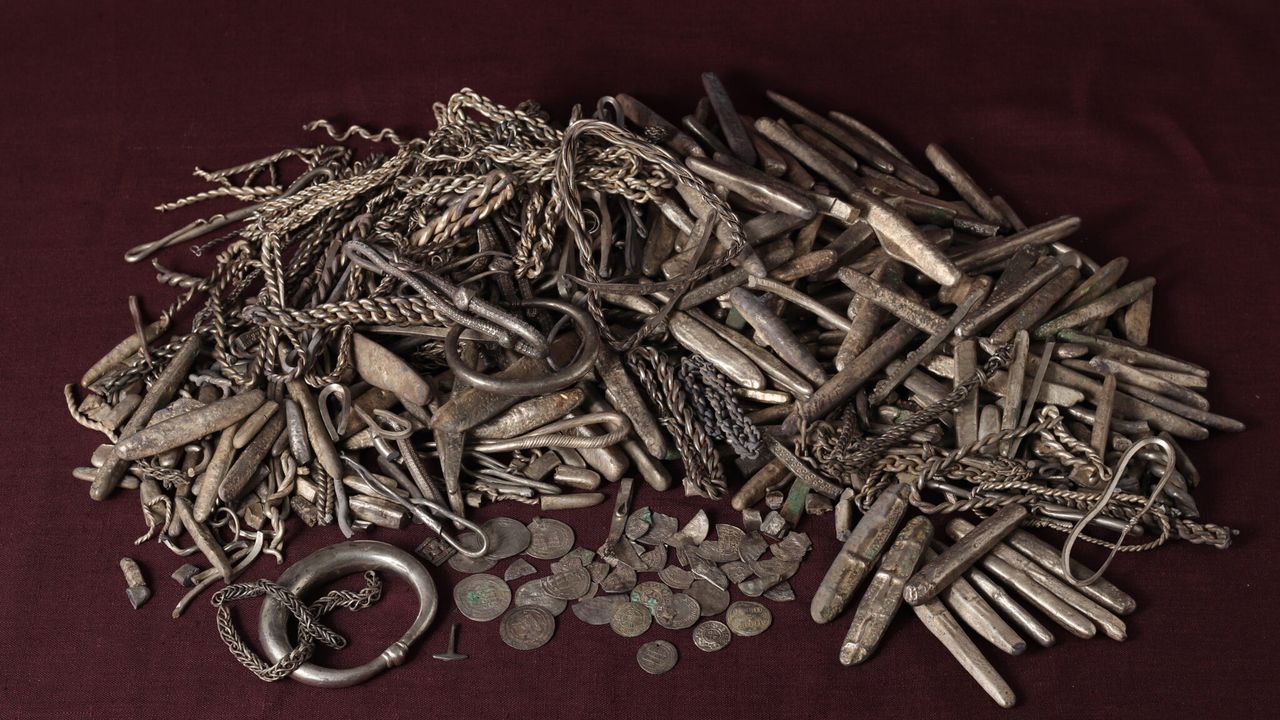
Archaeologists have uncovered about 2,600 silver coins inside a ceramic jug in Kolomna, western Russia. Most are dengi minted by rulers of the Grand Principality of Moscow, while more than 350 appear to be previously unknown local varieties.

September 2, 2026
1 Source
Medieval Coin Hoard of 2,600 Silver Pieces Found in Kolomna
The Story

A hoard of approximately 2,600 silver coins has been discovered in the historic center of Kolomna in western Russia, according to Archaeology Magazine. The coins had been placed in a ceramic jug and buried at the site, where researchers identified them as dating to the fifteenth century.

Most of the hoard consists of dengi, coins valued at half a kopeck. One hundred kopecks equaled a ruble. The pieces were minted by monarchs of the Grand Principality of Moscow between about 1389 and the 1420s.

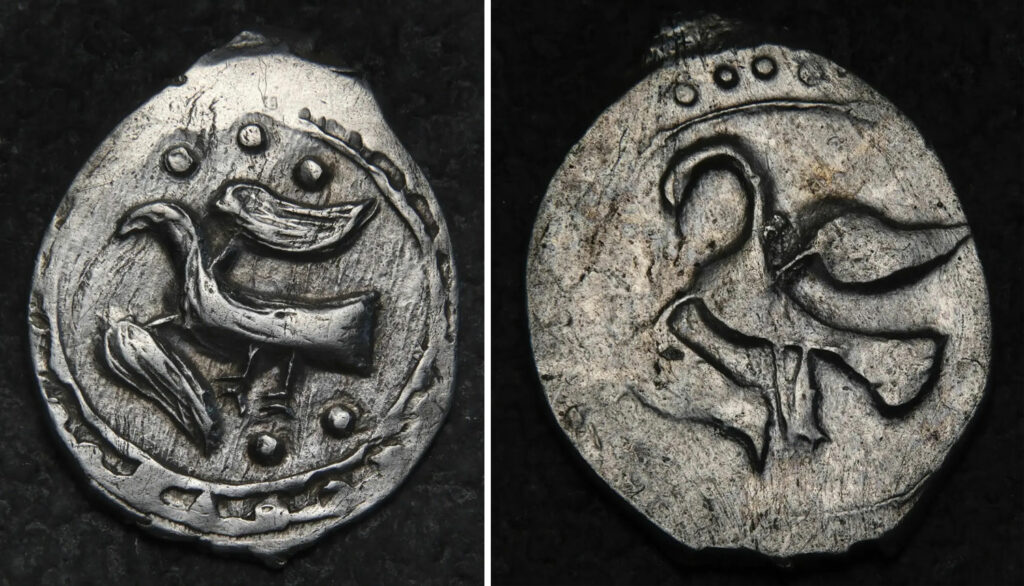
The collection includes examples with rare images of a bird in flight. More than 350 coins are described as previously unknown varieties minted locally in Kolomna, adding an important numismatic element to the find.

A.V. Engovatova of the Russian Academy of Sciences said researchers think the hoard’s owner may have died during a plague epidemic that affected the region between 1424 and 1427. The possible connection remains an interpretation rather than a confirmed explanation for why the coins were buried and left behind.

The discovery brings together a large group of monetary objects from a period when coins were being issued under the authority of the Grand Principality of Moscow. Its local varieties and unusual imagery provide the principal features highlighted in the reporting.


Reference Desk

Sources & Further Reading

Continue Exploring

Related Archaeology

More stories
Medieval Manuscript Fragments Illuminate Guernsey’s Literary Past
01
Artifacts
Score 95

Medieval Manuscript Fragments Illuminate Guernsey’s Literary Past

Seventeen fragments reused in early modern administrative bindings provide the first substantial evidence of medieval books and reading on Guernsey. Six are written in French, including a rare passage from a dramatic Griselda poem that survives in only one other manuscript.

Read story
Roman Shipwreck Carrying Hundreds of Amphorae Found off Sicily
02
Underwater Archaeology
Score 40

Roman Shipwreck Carrying Hundreds of Amphorae Found off Sicily

Italy’s Carabinieri cultural heritage protection unit has located a Roman shipwreck about three miles off Mazara del Vallo, Sicily. The approximately 2,100-year-old vessel contains around 500 amphorae, along with parts of anchors, and will undergo further scientific documentation.

Read story
Painted Walls and Mosaic Floors Found in Smyrna’s Agora
03
Artifacts
Score 40

Painted Walls and Mosaic Floors Found in Smyrna’s Agora

Researchers led by Akin Ersoy of İzmir Katip Celebi University have uncovered three possible public spaces dating to the fifth and sixth centuries A.D. in Smyrna’s agora, along with wall paintings found in the agora and theater.

Read story
Denmark’s Largest Known Viking Age Silver Hoard Found in a Backyard
04
Artifacts
Score 40

Denmark’s Largest Known Viking Age Silver Hoard Found in a Backyard

A homeowner in Rebild discovered about 18.5 kilograms of silver while preparing a terrace. The roughly 1,100-year-old hoard contains around 700 objects, including coins, bars, jewelry and a small Thor’s hammer, and is nearly three times larger than Denmark’s previous largest known Viking Age silver hoard.

Read story
Fragments Reveal Previously Unknown Fourth-Century Roman Law Book
05
Artifacts
Score 40

Fragments Reveal Previously Unknown Fourth-Century Roman Law Book

A University of Cincinnati scholar and the Penn Museum have joined 50 animal-skin fragments into a double-sided page from a late-fourth-century Roman legal text. The Latin manuscript discusses taxation and public infrastructure but does not match any previously known imperial legal code.

Read story
Ancient DNA Identifies Cacao Consumption at Georgia’s Etowah Site
06
Bioarchaeology
Score 40

Ancient DNA Identifies Cacao Consumption at Georgia’s Etowah Site

DNA recovered from three pottery fragments indicates that people at the Etowah Mounds consumed cacao during the 11th and 12th centuries. The finding provides evidence of cacao use east of the Mississippi River and points to connections with regions where the tropical plant grew.

Read story