
Western-derived agriculture appears to have reached ancient Gansu through cultural exchange rather than a large-scale migration of farmers, according to a study of ancient DNA from 149 individuals. The findings cover a period from about 4,700 to 3,000 years ago, when crops and livestock first domesticated in western Eurasia were introduced to the region.
The study, published in Cell on September 3, was led by Fu Qiaomei of the Institute of Vertebrate Paleontology and Paleoanthropology at the Chinese Academy of Sciences, in collaboration with multiple institutions. Researchers examined genomic evidence from Gansu, a region described as a crossroads for exchanges across Eurasia.
Although western-derived crops or livestock were adopted at nine of the 11 sites examined, the ancient individuals showed no detectable genetic influence from western Eurasia or Central Asia. Their principal genetic ancestries were linked instead to populations associated with the Yellow River basin, the southeastern Mongolian Plateau and the Tibetan Plateau. A small number of genetic outliers indicated contacts with nearby and more distant northern regions, including the Cis-Baikal area.
The researchers suggest that farming practices and domesticates may have spread through the Inner Asian Mountain Corridor, exchange networks or intermediary populations across the Mongolian Steppe. These possibilities remain interpretations of the genetic and archaeological evidence rather than evidence of a single confirmed route.
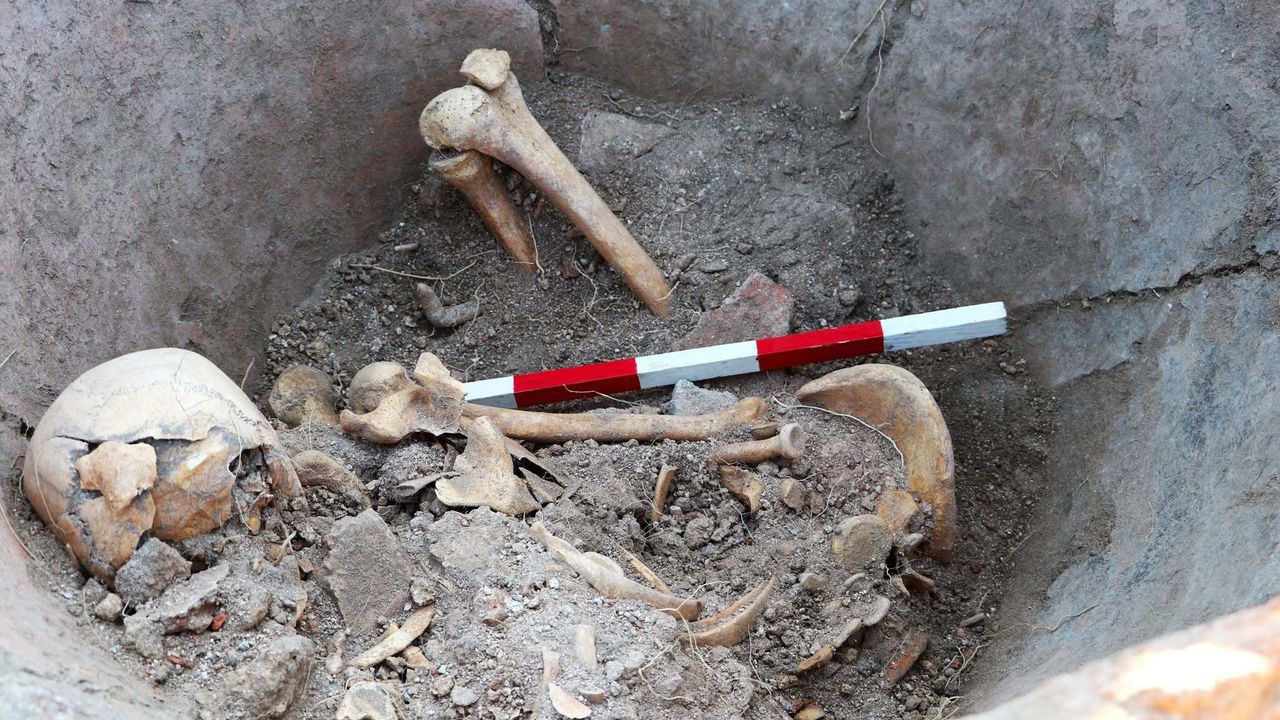
The study also examined social and burial practices at Mogou, a large cemetery dating from about 3,600 to 3,200 years ago. Kinship and identity-by-descent analyses showed that many individuals belonged to a broadly connected biological network that continued through the transition from the Qijia to the Siwa archaeological cultures.
Evidence pointed to both endogamy and some degree of exogamy at Mogou. The researchers found no significant difference between males and females in relatedness patterns, suggesting that the community did not strictly follow either patrilocal or matrilocal residence.
Burial arrangements were not determined solely by biological kinship. Individuals who were genetic outliers were more likely to be buried in settings interpreted archaeologically as lower status, while genetic relatedness did not strongly correspond to distance between burials. No first- or second-degree relatives were found buried together in multiple-burial tombs, and some co-buried individuals may have differed in social status or been interred at different times. The results indicate that social relationships, identity and the repeated use of tombs all influenced burial practices at Mogou.