Archaeology.Today
Field Report

LiDAR Survey Reveals More Than 20,000 Amazonian Earthworks

A study using canopy-penetrating LiDAR has expanded the known distribution of precolonial earthworks in southwestern Amazonia. The researchers tentatively estimate that the region’s population reached between 1.25 million and 3 million people around AD 100–300, although the estimate depends on evidence from a limited survey area.

September 2, 2026
3 Sources
LiDAR Survey Reveals More Than 20,000 Amazonian Earthworks
The Story

Aerial laser scanning has revealed hundreds of previously hidden earthworks in southwestern Amazonia, supporting a substantially larger estimate for the region’s precolonial population than earlier surveys allowed. The study, published in Nature, identifies more than 20,000 earthworks across the wider cultural area and proposes a population of 1.25 million to 3 million people around AD 100–300, when researchers believe the society was at or near its peak.

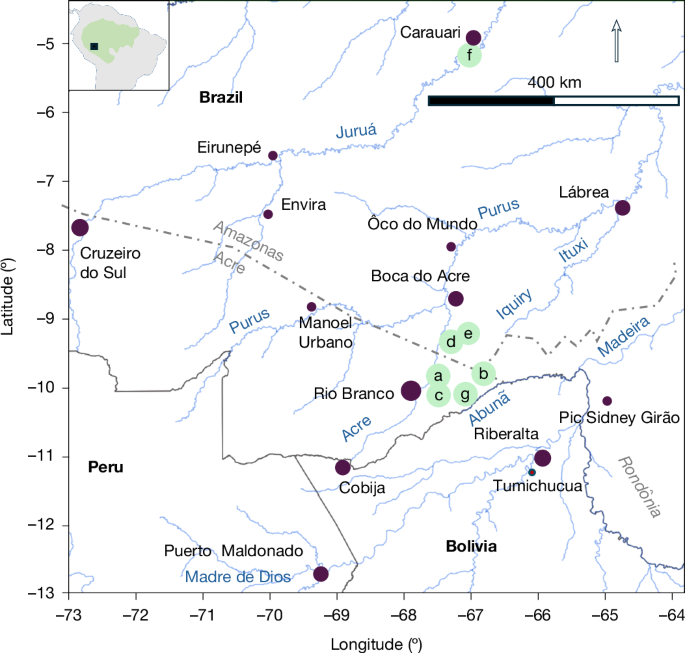
The research team used canopy-penetrating LiDAR, a form of airborne laser scanning that can produce terrain models beneath forest cover. In 2024, the team surveyed 4,430 kilometers of flight lines covering 4,497 square kilometers in the Brazilian states of Acre and Amazonas. The survey documented 432 earthworks, only 36 of which had previously been known.

Combined with earlier satellite, aerial-photograph and archaeological data, the new results allowed the researchers to refine the estimated extent of what they call the Aquiry civilization. The broader inventory includes more than 20,000 earthworks—about as many as previous estimates had assigned to the whole of Amazonia.

Many of the structures are geometric enclosures surrounded by ditches and embankments, often referred to as geoglyph-type earthworks. Their size generally ranges from 0.35 to 14 hectares, while the largest known example is nearly 50 hectares. Ditches are typically 9 to 13 meters wide and can reach as much as 5 meters below the surrounding surface.

The geometric geoglyphs were built between about 600 BC and AD 850, according to Bayesian modelling, although other earthworks in the region belong to later periods. LiDAR also showed that embanked enclosures without ditches are more common than satellite imagery had suggested. The researchers associate quadrilateral and multilateral examples with the Aquiry complex, while many roundish embankments date to after AD 1000–1200.

The study describes the Aquiry earthworks as likely public, ceremonial and political centers rather than places of permanent occupation. That interpretation remains a conclusion drawn from the structures’ arrangement and archaeological context, not a direct identification of their function.

The survey also found limits to the distribution. No earthworks were detected along several flight lines across upland areas between the upper Purus and upper Juruá rivers, although the researchers note that dense forest may have prevented accurate terrain modelling. They suggest the absence could alternatively reflect areas that were not permanently inhabited.

The authors caution that their population estimate is tentative and based on the surveyed cultural area. If comparable concentrations are found elsewhere in Amazonia, they say estimates of precolonial population density—and the effects of past human activity on forests, soils and biodiversity—may need to be reassessed.


Reference Desk

Sources & Further Reading

Continue Exploring

Related Archaeology

More stories
LiDAR Study Finds Ancient Maya Land Use Still Shapes Belize Forests
01
Archaeological Science
Score 60

LiDAR Study Finds Ancient Maya Land Use Still Shapes Belize Forests

A study of LiDAR data from northern Belize has identified links between forest structure and ancient Maya canals, settlements, buildings, and upland walls. The strongest relationship appeared around former wetland agricultural fields, although researchers say broader surveys are needed to determine how widely the pattern extends.

Read story
Study Warns of Health Risks in Trade of Mummified Human Remains
02
Bioarchaeology
Score 45

Study Warns of Health Risks in Trade of Mummified Human Remains

A peer-reviewed study examining 128 online listings found mummified human remains, including heads, hands and feet, offered through social media, e-commerce sites and auction houses. Researchers warn that deterioration, dormant microorganisms and toxic preservation materials could endanger buyers, sellers and workers handling shipments.

Read story
Roman Shipwreck Carrying Hundreds of Amphorae Found off Sicily
03
Underwater Archaeology
Score 40

Roman Shipwreck Carrying Hundreds of Amphorae Found off Sicily

Italy’s Carabinieri cultural heritage protection unit has located a Roman shipwreck about three miles off Mazara del Vallo, Sicily. The approximately 2,100-year-old vessel contains around 500 amphorae, along with parts of anchors, and will undergo further scientific documentation.

Read story
Skeleton Found Inside Giant Roman Jar at Bulgarian Fortress
04
Bioarchaeology
Score 40

Skeleton Found Inside Giant Roman Jar at Bulgarian Fortress

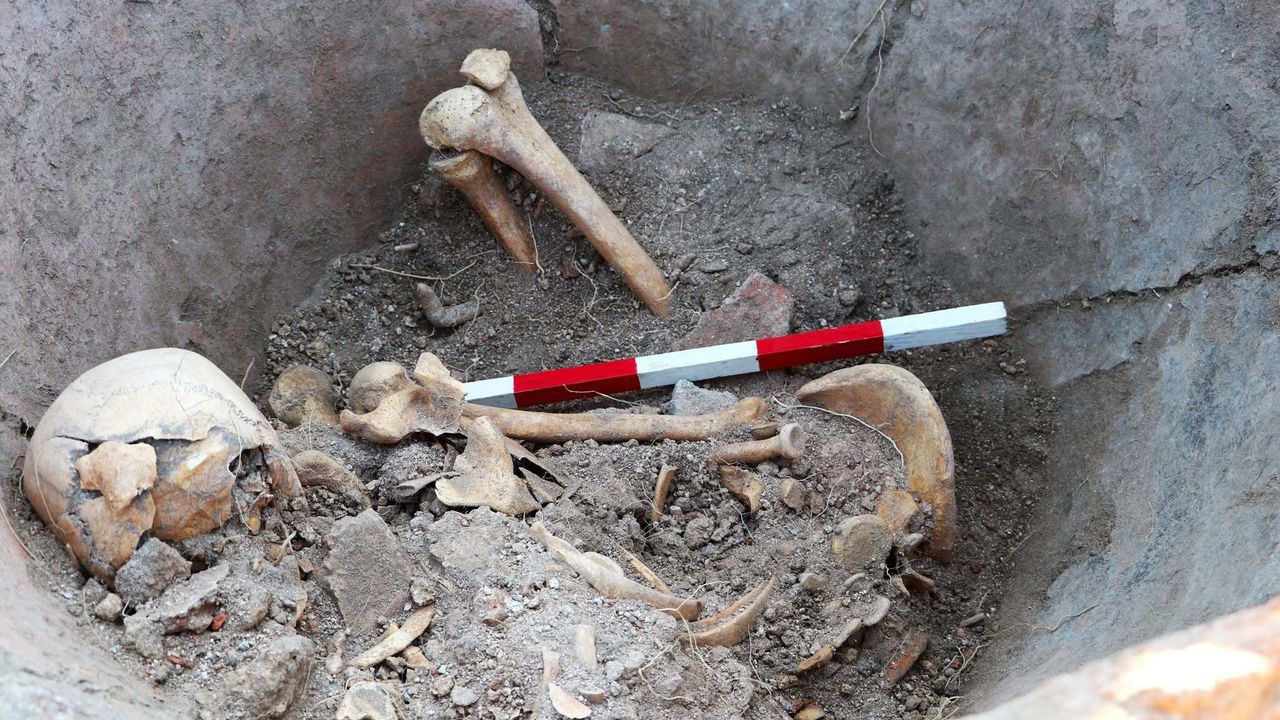
Archaeologists excavating the Roman colony of Deultum in Bulgaria found a human skeleton inside a large storage jar, or dolium. The remains may belong to a young man who sought shelter during an attack and fire around A.D. 400, but researchers have not yet established how he died.

Read story
Denmark’s Largest Known Viking Age Silver Hoard Found in a Backyard
05
Artifacts
Score 40

Denmark’s Largest Known Viking Age Silver Hoard Found in a Backyard

A homeowner in Rebild discovered about 18.5 kilograms of silver while preparing a terrace. The roughly 1,100-year-old hoard contains around 700 objects, including coins, bars, jewelry and a small Thor’s hammer, and is nearly three times larger than Denmark’s previous largest known Viking Age silver hoard.

Read story
Fragments Reveal Previously Unknown Fourth-Century Roman Law Book
06
Artifacts
Score 40

Fragments Reveal Previously Unknown Fourth-Century Roman Law Book

A University of Cincinnati scholar and the Penn Museum have joined 50 animal-skin fragments into a double-sided page from a late-fourth-century Roman legal text. The Latin manuscript discusses taxation and public infrastructure but does not match any previously known imperial legal code.

Read story