Archaeology.Today
Field Report

Researchers Examine Incised Obsidian Points from Neolithic Anatolia

Microscopic analysis and experimental reproduction suggest that markings on obsidian points from Tepecik-Çiftlik were deliberately made with flint. Their similar wear and archaeological contexts, however, offer no single explanation for the designs.

September 1, 2026
1 Source
Tepecik-Çiftlik
Researchers Examine Incised Obsidian Points from Neolithic Anatolia
The Story

Eleven obsidian points discovered at the Neolithic village of Tepecik-Çiftlik in central Anatolia bear distinctive incised designs, prompting researchers to investigate how the markings were made and what they may have represented.

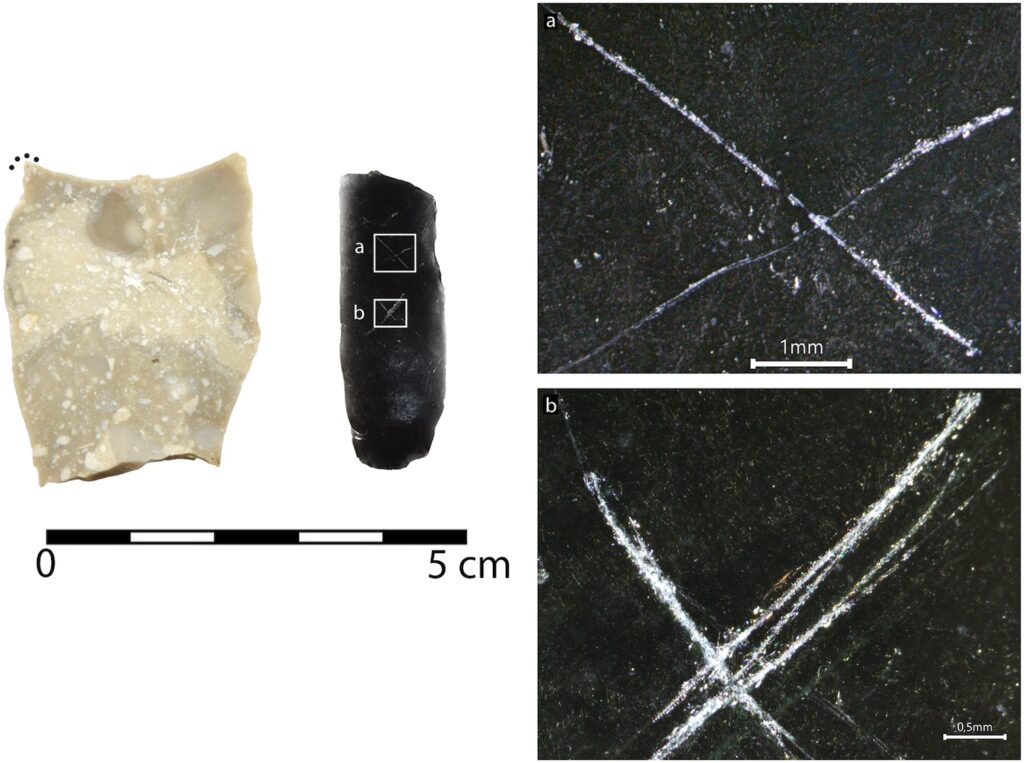
The village lies between two major sources of volcanic glass. Across the region, markings have been identified on only 54 of the thousands of obsidian arrowheads recovered. Alice Vinet of Aix-Marseille University and Denis Guilbeau of France’s Ministry of Culture examined the incised points under microscopes and attempted to reproduce their markings.

Their experiments indicated that making the crossed and other designs required repeated strokes with a piece of flint. The process, they concluded, makes accidental damage an unlikely explanation for the markings on the smooth obsidian surfaces.

The researchers also compared the marked points with unmarked examples. The two groups were similar in size and shape, while the incised points did not appear to have been placed in special contexts such as graves. Wear on the marked points was also comparable to wear observed on unmarked arrowheads, providing no clear indication that the etched objects had been used differently.

A possible clue came from other incised arrowheads found at the same sites. These objects displayed similar motifs, suggesting that some designs may have been part of a broader marking practice. Even so, the researchers concluded that the markings may not all have served the same purpose.

The findings, reported by Archaeology Magazine from an IFL Science report, distinguish between the physical evidence for deliberate engraving and the more uncertain question of why the points were marked. The study was published in PLOS One.
Reference Desk

Sources & Further Reading

Continue Exploring

Related Archaeology

More stories
11,000-Year-Old Human-and-Leopard Sculpture Found at Karahantepe
01
Discoveries
Score 120

11,000-Year-Old Human-and-Leopard Sculpture Found at Karahantepe

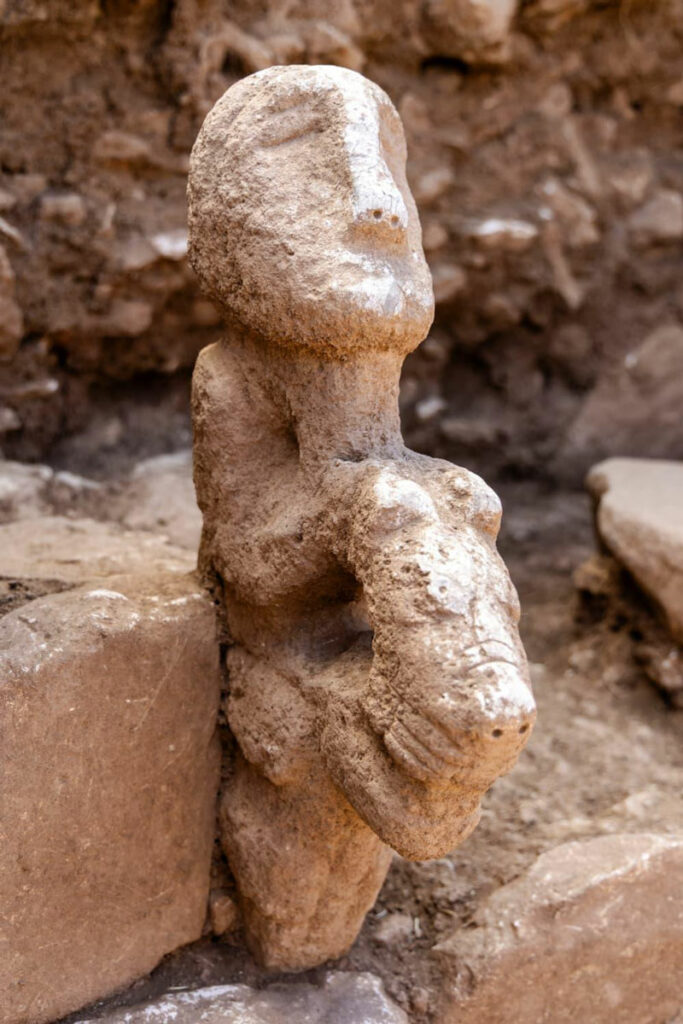
A sculpture showing a person seated on a leopard has been uncovered at the Neolithic site of Karahantepe in southeastern Turkey. The 28-inch-tall find was placed on a bench inside a circular, stone-paved structure measuring about 10 feet across.

Read story
LiDAR Study Finds Ancient Maya Land Use Still Shapes Belize Forests
02
Archaeological Science
Score 20

LiDAR Study Finds Ancient Maya Land Use Still Shapes Belize Forests

A study of LiDAR data from northern Belize has identified links between forest structure and ancient Maya canals, settlements, buildings, and upland walls. The strongest relationship appeared around former wetland agricultural fields, although researchers say broader surveys are needed to determine how widely the pattern extends.

Read story
Wallaby-Tooth Ornaments Identified at Queensland Rock Shelter
03
Discoveries
Score 20

Wallaby-Tooth Ornaments Identified at Queensland Rock Shelter

Twelve wallaby teeth found at Windmill Way in Queensland were mounted with plant resin, indicating they may once have formed part of a necklace or headband. The assemblage is described as the first such find from Cape York Peninsula and the only known example of this type found outside burials in northeastern Australia.

Read story
Polish Junkyard Find May Be Part of a Vandal Warrior’s Cremation Burial
04
Discoveries
Score 20

Polish Junkyard Find May Be Part of a Vandal Warrior’s Cremation Burial

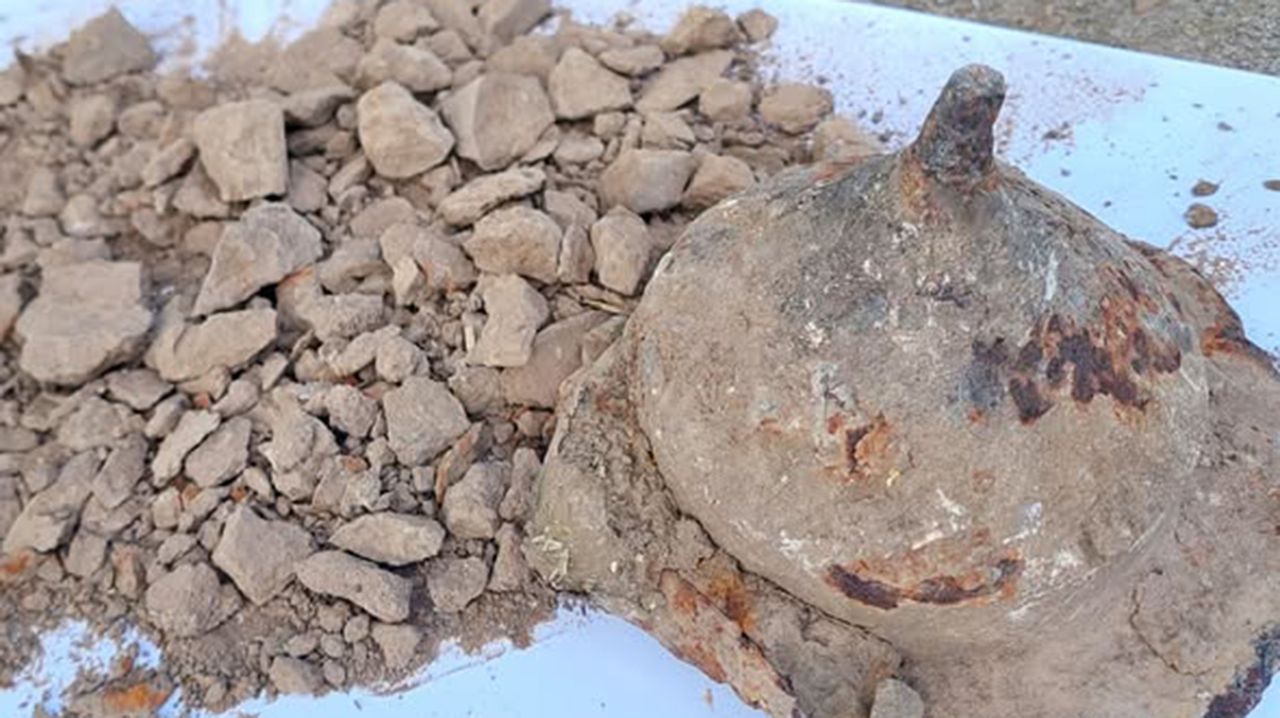
A man searching for car parts near Hrubieszów found an iron shield boss estimated to be about 1,800 years old. Examination of earth trapped inside revealed cremated bones, leading archaeologists to identify the object as a possible remnant of a Vandal warrior’s burial.

Read story
Study Examines Unusual 17th-Century Burial in Pień, Poland
05
Discoveries
Score 20

Study Examines Unusual 17th-Century Burial in Pień, Poland

A multidisciplinary study of Grave 75 at a cemetery in Pień examines the remains of a woman who died at about 17–19 years old. A sickle placed across her neck and a padlock fixed to her toe suggest measures intended to prevent the dead from returning, although researchers frame the burial within historical beliefs and social fears.

Read story
Fragments Reveal Previously Unknown Fourth-Century Roman Law Book
06
Artifacts
Score 20

Fragments Reveal Previously Unknown Fourth-Century Roman Law Book

A University of Cincinnati scholar and the Penn Museum have joined 50 animal-skin fragments into a double-sided page from a late-fourth-century Roman legal text. The Latin manuscript discusses taxation and public infrastructure but does not match any previously known imperial legal code.

Read story