
An Egyptian archaeological mission has discovered the tomb of an Old Kingdom official at Saqqara, together with an interconnected network of burial shafts containing human remains and funerary objects. The finds were made during the first excavation season in an area west of the Bubasteion necropolis.
The tomb belonged to an official named Sakhnetio-Btah. Its funerary chapel included a false door that remained standing in its original position. In front of it, archaeologists found a complete group of alabaster ritual objects, including an offering table, an offering implement, a purification basin, a vessel and a mat.
Hieroglyphic inscriptions on the false door and objects preserve the official’s name and titles. According to the Egyptian mission, these included royal chamberlain, overseer of all the king’s works, overseer of royal documents, keeper of royal secrets, priest of the goddess Maat and overseer of the library. The titles indicate that Sakhnetio-Btah held a senior administrative position and had connections to the royal court.
The objects’ survival in their original locations offers researchers archaeological evidence for examining burial rituals and religious practices during the Old Kingdom, according to Mohamed Abdel Badi, head of the Egyptian Antiquities Sector.
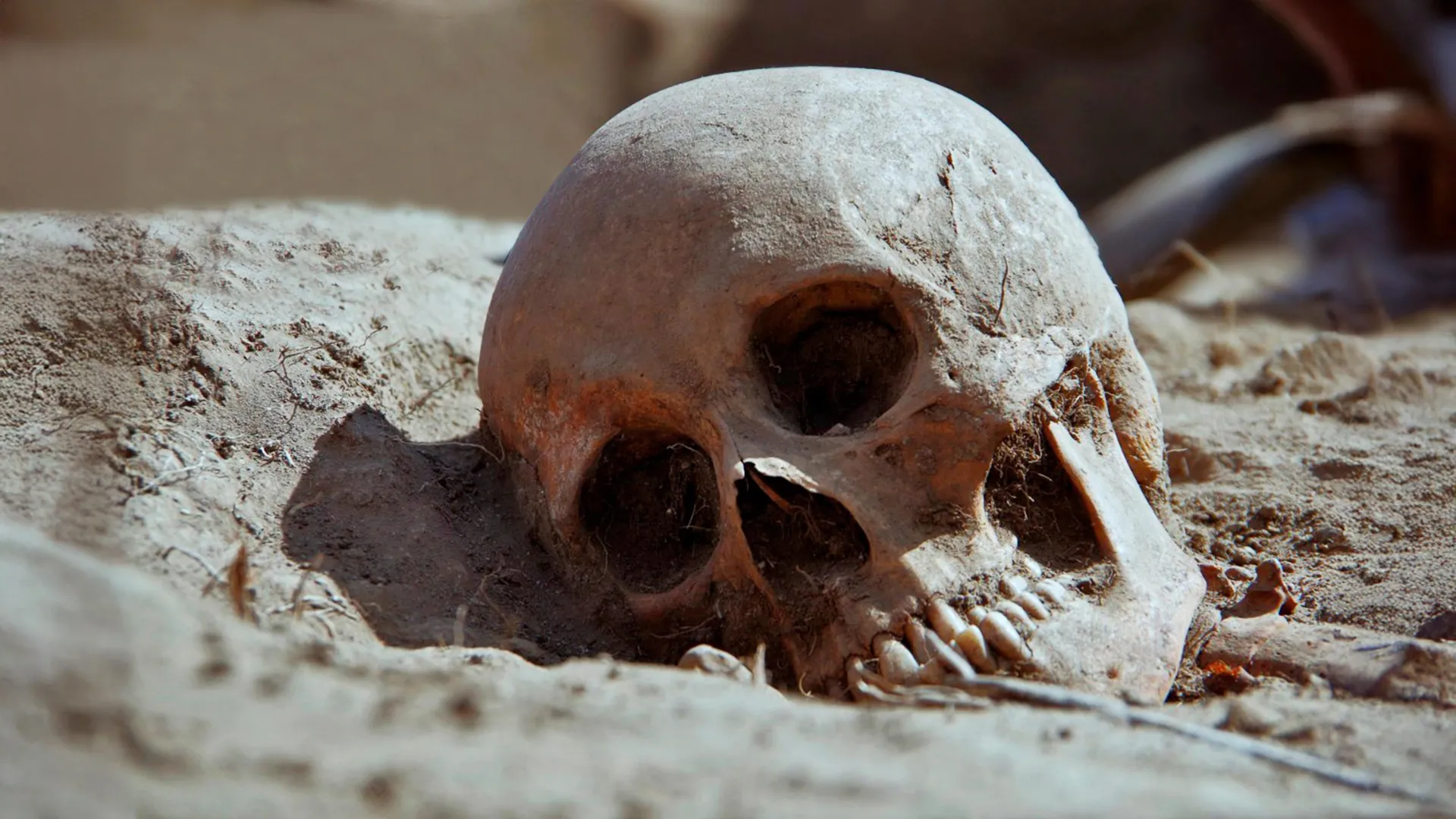
Elsewhere in the excavation area, the team identified a complex system of connected burial shafts containing numerous burials and large quantities of decorated funerary cartonnage. More than 100 ushabti figurines were recovered, along with three stone burials found in their original positions, a wooden falcon figure, pottery and other archaeological material.
The finds indicate that the area was used and adapted during successive periods of ancient Egyptian history. The material may be particularly useful for studying burial customs and funerary practices during Egypt’s Late Period, while continued analysis could help reconstruct how the Old Kingdom tomb and its surroundings were reused.
Preliminary investigations suggest that several shafts were looted in antiquity. Archaeologists identified passages and disturbances believed to have been made by ancient tomb robbers moving between funerary structures. Despite this, the surviving remains may provide information about the necropolis’s internal organisation and its successive phases of development.
The mission is continuing excavation, documentation and analysis. Further structures, burials and artefacts may remain beneath the sands, and the results are expected to undergo additional specialist study before publication in a peer-reviewed scientific journal.